Treated lumber decking is the foundation of more than 70% of decks across America. It’s affordable, durable, and versatile enough for everything from structural framing to finished surfaces.
Quick Answer: What You Need to Know About Treated Lumber Decking
-
What it is: Wood infused with preservatives to resist rot, decay, and insects.
-
Cost: The most affordable decking option.
-
Lifespan: 15+ years with proper maintenance.
-
Best for: Deck framing (posts, joists, beams) and budget-conscious surface boards.
-
Key upgrade: Kiln-Dried After Treatment (KDAT) lumber reduces warping and is ready to finish immediately.
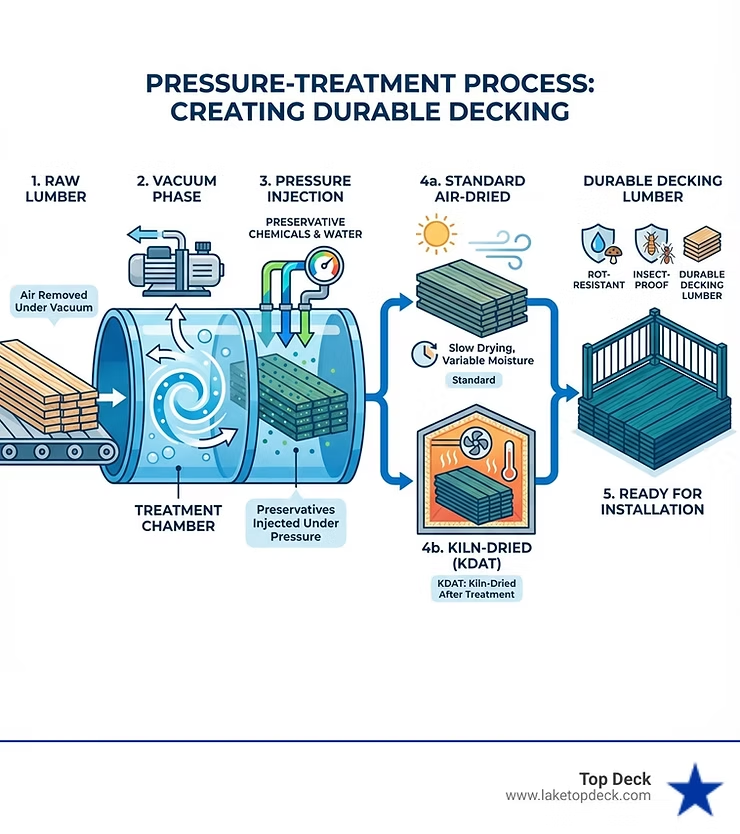
The pressure-treatment process infuses wood with chemical preservatives, creating a protective barrier against moisture and pests. This makes ordinary softwood strong enough for years of outdoor exposure.
Modern treatments like MicroPro Sienna have a significantly lower environmental impact, with less than half the carbon footprint of traditional treated wood. These low-VOC formulas are certified safe for contact with plants, animals, and waterways.
However, the standard treatment process leaves boards wet, causing them to swell and then shrink unevenly as they dry. This leads to the warping and twisting that frustrates many deck builders. That’s where kiln-dried after treatment (KDAT) lumber changes the game. By drying boards evenly after treatment, KDAT eliminates most moisture-related problems, delivering lumber that’s lighter, straighter, and ready to finish right away.
I’m Jason Dampier of TopDeck. With years of experience helping Ozarks homeowners, I’ve seen that selecting the right treated lumber decking is the key to a long-lasting deck versus one needing constant repairs.
Why Choose Treated Lumber Decking for Your Project?
For a deck that stands the test of time in the unpredictable weather of Southwest Missouri, treated lumber decking is a practical and popular choice, valued for its proven performance.
What is Pressure-Treated Lumber and How is it Made?
Pressure-treated lumber is wood that has been infused with chemical preservatives to make it highly durable. The process involves placing lumber in a sealed tank, removing the air, and forcing a preservative solution deep into the wood fibers under pressure. This creates a powerful barrier against moisture, decay, and insects.
The standards for these treatments are set by organizations like the American Wood Protection Association (AWPA). This process leaves the boards saturated with water, which is essential for treatment but can lead to warping if the wood isn’t dried properly.
Key Benefits of Treated Lumber Decking
The benefits of choosing treated lumber decking are compelling for homeowners looking for a reliable outdoor living solution.
-
Most Affordable Option: Pressure-treated lumber is consistently the most affordable decking material available, making it an excellent choice for new constructions or renovations on a budget.
-
Long Lifespan with Maintenance: With proper care, pressure-treated decking can easily last 15 years or more. The treatment process guards against the common enemies of wood: rot, decay, and termites.
-
Structural Strength: Treated lumber decking is the top choice for the structural frame of your deck—the posts, joists, and beams. It can support more weight and span longer distances than many other materials, creating a safe, sturdy foundation.
-
Versatility Beyond Decking: Its resistance to decay makes treated lumber suitable for many outdoor projects, including pergolas, arbors, walkways, docks, fences, and outdoor furniture.
-
Customizable with Stains and Sealers: Unlike pre-finished materials, treated lumber decking offers the creative freedom to stain or paint it to match your home’s exterior, allowing your deck’s look to evolve with your style.
-
Widely Available: At TopDeck, we ensure our customers in Camdenton, Springfield, and across Southwest Missouri have access to premium options, including KDAT lumber, to get their projects started right.
For more information about our decking products, visit our dedicated page: More info about our decking products.
Environmental Considerations
Modern treated lumber decking has made significant strides in sustainability.
-
Renewable Resource: Wood is a renewable resource. We recommend choosing FSC-certified lumber, which comes from sustainably managed forests.
-
Modern Low-VOC Treatments: Advanced wood preservatives like MicroPro Sienna are low in Volatile Organic Compounds (VOCs) and have low eco-toxicity, making them safer for your family, pets, and the environment.
-
Reduced Carbon Footprint: These modern treatments have an environmental footprint less than half that of traditional treated wood and are certified safe for use in applications like raised garden beds.
A Buyer’s Guide: How to Select the Best Boards
Choosing the right treated lumber decking boards is crucial for a successful project and prevents headaches down the road.
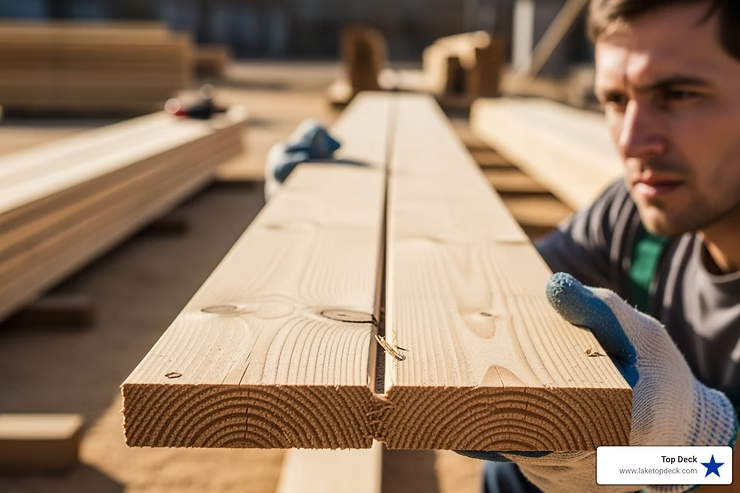
Pressure-treated lumber’s main challenge is its tendency to warp. The treatment process saturates the boards with water, and as they dry unevenly, they can bow, cup, or twist. Careful board selection is key to minimizing this.
Here’s what to look for:
-
Check for Straightness: Sight down the length of the board. A slight imperfection may be acceptable, but avoid any significant twists, bows, or curves.
-
Inspect the End Grain: Look for narrow growth rings, which indicate more stable wood. Avoid boards that show the “pith” (the tree’s center), as they are prone to splitting.
-
Look for Knots and Splits: Avoid boards with large, loose knots, especially near the edges, as they can weaken the board. Check for significant splits or cracks.
-
Understand Wood Grain: For decking, choose boards where the grain runs as straight as possible. Installing boards “bark side up” is a common practice to help shed water.
-
Moisture Content: If possible, use a moisture meter. Boards above 19% moisture content are more likely to warp. This is where KDAT lumber offers a huge advantage, as it’s already dried.
Reading the Label: Ground Contact vs. Above-Ground
Understanding the treatment level on the label is critical for your deck’s safety and longevity.
-
Above-Grade Use (.15-.25): For components not in direct contact with the ground, like deck boards and railings.
-
Ground-Contact Use (.40): Essential for any lumber touching the ground or in constant moisture, such as posts and stair stringers.
-
Below-Grade Use (.60): For burial applications, offering the highest level of protection.
Using the correct lumber type for its intended application is paramount. Our team at TopDeck can help you choose the right materials for every part of your project.
For more detailed tips on selecting the best lumber for your deck, check out our guide: 10 Tips for Choosing and Buying Deck Lumber.
The KDAT Advantage: Why Kiln-Dried After Treatment is Superior
We’ve discussed the challenges of wet treated lumber decking. Kiln-Dried After Treatment (KDAT) lumber is the solution.
Standard treated lumber is sold wet, making it prone to shrinking and warping as it dries. This can lead to loose fasteners and uneven gaps. KDAT lumber solves this problem. It undergoes a controlled drying process after treatment, which removes excess moisture and offers several key advantages:
-
Reduced Warping and Shrinking: KDAT lumber is far more stable, minimizing the risk of warping, bowing, and twisting for a straighter, more attractive deck.
-
Lighter and Easier to Handle: With less water weight, KDAT boards are lighter and easier to transport, cut, and install.
-
Ready for Immediate Staining: Unlike wet lumber that needs weeks or months to dry, KDAT lumber is ready for staining or sealing almost immediately, allowing you to protect your deck sooner.
-
Improved Fastener Performance: The stable wood holds fasteners more securely, reducing the chance of screws backing out over time.
While KDAT lumber has a slightly higher upfront cost, the benefits in reduced waste, easier installation, and a superior finished product make it a worthwhile investment.
Treated Lumber vs. Other Wood Decking Materials
When planning your deck, it’s helpful to understand how treated lumber decking stacks up against other common materials like cedar, redwood, or composite.
|
Feature |
Pressure-Treated Lumber (Standard) |
Kiln-Dried After Treatment (KDAT) Lumber |
Cedar Decking |
Redwood Decking |
Composite Decking |
|
Cost (relative) |
Most Affordable |
Moderately Affordable |
Moderate to High |
High |
High to Very High |
|
Lifespan |
10-15 years (with maintenance) |
15+ years (with maintenance) |
~20 years (with maintenance) |
25+ years (with maintenance) |
25-50 years |
|
Maintenance |
Stain/seal every 2-3 years, annual cleaning |
Stain/seal every 2-3 years, annual cleaning (can be finished immediately) |
Periodic staining/sealing to retain color, annual cleaning |
Periodic staining/sealing to retain color, annual cleaning |
Annual cleaning (minimal) |
|
Warping/Stability |
Prone to warping if wet-installed |
Significantly reduced warping/shrinking |
Good stability (natural oils) |
Excellent stability (natural oils) |
Very stable |
|
Environmental |
Modern treatments low VOC, renewable |
Modern treatments low VOC, renewable |
Renewable, natural |
Renewable, natural |
Recycled materials, but not always recyclable end-of-life |
|
Structural Use |
Excellent for structural framing |
Excellent for structural framing |
Not ideal for structural |
Not ideal for structural |
Not for structural framing |
For more details on our premium KDAT treated lumber, visit: More info about our KDAT Treated Lumber.
Cost Comparison
As the table shows, pressure-treated lumber is the most budget-friendly option. KDAT costs slightly more due to the extra drying process, while natural woods like cedar and redwood, as well as composite decking, have a higher initial investment.
Lifespan and Durability
A well-maintained pressure-treated decking can last 15 years or more, with KDAT’s improved stability often extending that lifespan. Natural woods like cedar and redwood can last 20-25+ years, while composite decking offers the longest lifespan, often warrantied for 25 to 50 years.
Maintenance Requirements
Pressure-treated lumber requires cleaning and sealing every two to three years to maintain its appearance and longevity. A key benefit of KDAT lumber is that it can be finished immediately. Natural woods also need periodic sealing to prevent graying. Composite decking is the lowest maintenance option, typically only needing annual cleaning.
Best Practices for Installation and Maintenance
Proper handling, installation, and ongoing maintenance are key to a long-lasting treated lumber decking investment.
Storing Pressure-Treated Lumber Before Installation
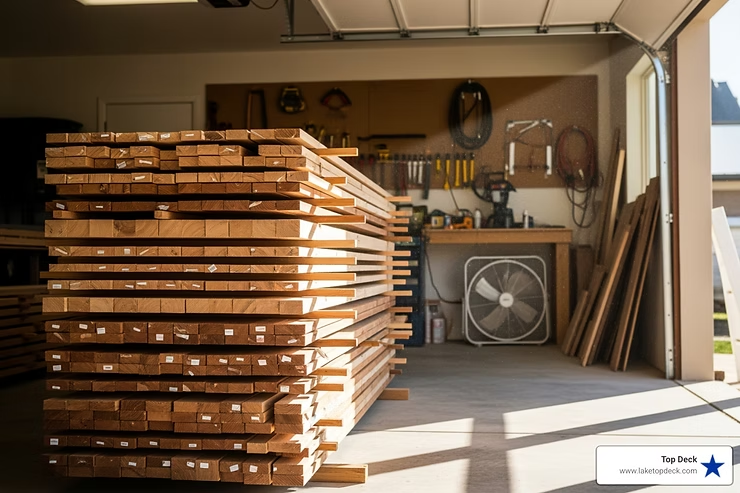
Proper storage of standard wet treated lumber decking is critical to prevent warping. Store lumber on a flat, level surface off the ground.
-
Lift and Ventilate: Use “stickers” (small wood strips) between layers to allow air to circulate, promoting even drying.
-
Protect from Elements: Store lumber in a covered area like a garage. If outdoors, cover with a tarp but ensure airflow to prevent moisture buildup.
-
Weight it Down: Placing weights on top of the stack helps keep boards straight as they acclimate.
These steps give your lumber the best chance to dry evenly, reducing the likelihood of warping.
Key Installation Tips
Proper installation techniques are vital for a quality, long-lasting deck.
-
Proper Board Spacing: For wet pressure-treated decking, install boards with no gap, as they will shrink. For pre-dried KDAT lumber, leave a consistent 3/16-inch gap for drainage and minor movement.
-
“Bark Side Up” or “Frown Down” Orientation: Install boards with the end-grain arch facing up (like a rainbow). This encourages cupping in a way that sheds water.
-
Ensuring Proper Drainage and Airflow: Ensure the deck frame allows for drainage and has unobstructed airflow underneath to prevent moisture buildup and rot.
-
Use Correct Fasteners: Always use fasteners designed for pressure-treated lumber, such as stainless steel or ACQ-compatible coated screws, to prevent corrosion. Pre-drilling ends can prevent splitting.
-
Straightening Warped Boards: Tools like the CAMO LEVER can help straighten a slightly warped board during installation. Our team at TopDeck is always ready to share more installation insights. Visit our services page for more information.
Maintaining Your Treated Lumber Decking for Longevity
Regular maintenance is the key to ensuring your treated lumber decking looks great and lasts for decades.
-
Importance of Cleaning: Annually, clean your deck with a deck cleaner to remove dirt, mildew, and grime that can degrade the wood.
-
When to Stain or Seal: For standard pressure-treated decking, apply a stain or sealer every two to three years to protect it from UV rays and moisture. KDAT lumber can be finished almost immediately after installation.
-
Choosing the Right Finish: Choose a high-quality exterior stain or sealer. Transparent stains show the wood grain, while solid stains offer more UV protection.
-
Repairing Minor Damage: Promptly address small issues like loose fasteners or splinters to prevent them from becoming larger problems.
With good maintenance, your treated lumber decking should last 15 years or more, providing a beautiful outdoor space for your family.
Frequently Asked Questions about Treated Lumber
Here are some of the most common questions we hear about treated lumber decking from homeowners in Southwest Missouri.
How long does pressure-treated decking really last?
With proper installation and consistent maintenance (regular cleaning and sealing), a pressure-treated decking can last 15 years or more. The quality of the lumber (especially KDAT), installation practices, and local climate all influence its ultimate lifespan.
Can I paint my pressure-treated deck?
Yes, but proper preparation is crucial. If using standard wet lumber, you must wait for it to dry completely, which can take weeks or months. KDAT lumber can be painted much sooner. Always clean the deck thoroughly and use a high-quality exterior primer and paint designed for decks. Many homeowners prefer staining, as it penetrates the wood and is less prone to peeling over time.
Why do pressure-treated boards warp and how can I prevent it?
Boards warp because the treatment process saturates them with water. As they dry unevenly, the wood shrinks and twists. To prevent this:
-
Choose KDAT Lumber: This is the most effective solution, as it’s pre-dried and stable.
-
Select Carefully: Inspect boards at the lumberyard and choose the straightest ones.
-
Store Properly: Stack lumber flat with stickers for airflow to allow for even drying before installation.
-
Install Correctly: Use proper spacing and ensure good ventilation beneath the deck.
-
Finish Promptly: Apply a quality stain or sealer once the wood is dry to regulate moisture absorption.
Start Your Deck Project with Premium KDAT Lumber
At TopDeck, we understand that your deck is more than just an outdoor structure; it’s an extension of your home, a place for relaxation, entertaining, and creating lasting memories. That’s why we’re committed to providing the highest quality materials and expert guidance to homeowners and contractors throughout the Lake of the Ozarks, Springfield, and surrounding areas.
We’ve explored the many benefits of treated lumber decking – its affordability, versatility, and structural strength – making it the backbone of countless beautiful outdoor living spaces. We’ve also digd into the nuances, like the challenge of warping with standard wet-treated lumber, and the superior solution offered by KDAT.
For a deck that starts straighter, stays straighter, and is ready to finish sooner, KDAT (Kiln-Dried After Treatment) lumber is the clear choice. It addresses the common frustrations of treated wood, giving you a more stable and aesthetically pleasing foundation for your outdoor dreams.
Our team at TopDeck is here to support you from frame to finish, ensuring you have the right materials and knowledge to build a deck that will stand proud for years to come. Whether you’re a seasoned contractor or a first-time DIYer, we offer premium decking, railing, and framing materials, along with the expert advice you need.
Ready to transform your backyard into the ultimate Outdoor Living space? Connect with our specialists today and explore our premium KDAT treated lumber options: Explore our premium KDAT treated lumber. Let’s build something great together!