Building a deck in Missouri is one of the most practical outdoor investments a homeowner can make. It extends your living space, increases property value, and holds up well through Missouri’s four distinct seasons when built correctly. But costs vary widely depending on materials, size, design complexity, and contractor experience. This guide breaks down everything you need to budget accurately before breaking ground.
Average Deck Cost in Missouri
Most Missouri homeowners spend between $4,000 and $20,000 on a new deck build. The wide range reflects real differences in material choice, deck size, and local labour rates across Nixa, Springfield, Ozark, and Branson.
Here is a practical breakdown by material type and project size:
|
Deck Type |
Cost Per Sq Ft |
200 Sq Ft Deck |
400 Sq Ft Deck |
|
Pressure-Treated Wood |
$15 – $25 |
$3,000 – $5,000 |
$6,000 – $10,000 |
|
Cedar or Redwood |
$25 – $40 |
$5,000 – $8,000 |
$10,000 – $16,000 |
|
Composite (Trex, TimberTech) |
$35 – $60 |
$7,000 – $12,000 |
$14,000 – $24,000 |
|
PVC / Vinyl Decking |
$40 – $65 |
$8,000 – $13,000 |
$16,000 – $26,000 |
|
Steel-Framed Composite |
$55 – $80 |
$11,000 – $16,000 |
$22,000 – $32,000 |
Labour costs in Missouri typically run $15 to $35 per square foot on top of materials. Building permits in Missouri range from $50 to $1,000, depending on project scope and municipality. Always factor permits into your total budget.
Key cost drivers to know:
-
Material choice is the single biggest variable, composite costs two to three times more than pressure-treated wood upfront
-
Deck height affects deck framing costs in Missouri, elevated and second-storey decks cost more due to structural requirements
-
Site conditions matter: sloped yards, difficult access, and rock-heavy soil all increase labour time and cost
-
Contractor credentials affect price, Trex Pro Platinum and Deckorators Certified installers charge more but deliver manufacturer-backed warranty coverage
Additional Features That Impact the Price (Railings, Stairs, Lighting)
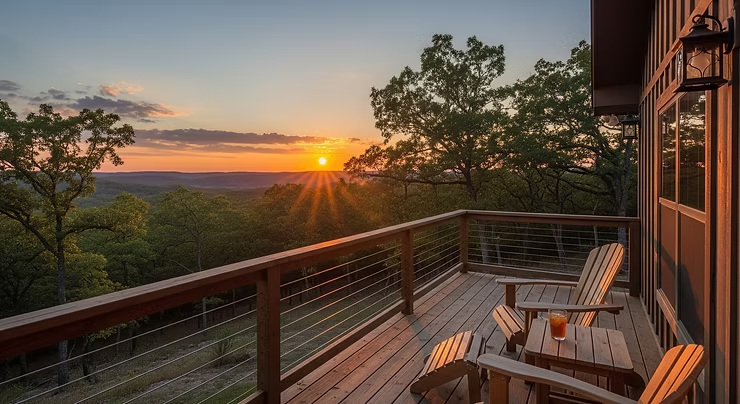
The base deck structure is only part of the final cost. Additional features are where budgets are frequently underestimated. Here is what each common upgrade typically adds in Missouri:
Railings:
- Missouri deck railing prices for pressure-treated wood typically run $20 – $35 per linear foot
-
Aluminium railing systems (Fortress AL13): $40 – $60 per linear foot
-
Cable railing systems: $60 – $120 per linear foot
-
Glass panel railings: $100 – $150 per linear foot
Stairs:
-
Standard 3-step staircase: $300 – $800
-
Extended stair runs (4–8 steps): $700 – $2,000 depending on width and material
Lighting:
-
Low-voltage LED stair and post lighting: $8 – $30 per fixture installed
-
Full deck lighting systems with transformer: $800 – $2,500, depending on scope
Other common additions and their approximate costs:
-
Pergola or shade structure: $3,000 – $10,000
-
Built-in seating or benches: $500 – $2,000
-
Under-deck ceiling system (Zip-Up): $30 – $50 per square foot
-
Screen enclosure: $7 – $15 per square foot
-
Outdoor kitchen rough-in: $5,000 – $15,000+
-
G-Tape waterproofing and joist tape: $1 – $3 per linear foot
Every feature adds function and resale appeal, but each also adds cost. Prioritise the features you will actually use and build the rest into future phases if budget is tight.
How Deck Size and Design Affect Total Cost
Size is the most straightforward cost factor, more square footage means more materials and more labour. But design complexity matters just as much as raw size.
Size benchmarks for Missouri homeowners:
-
Small deck (under 200 sq ft):
$4,000 – $10,000. Ideal for a seating area or grilling zone.
-
Medium deck (200–400 sq ft):
$8,000 – $20,000. Suits dining, lounging, and entertaining areas.
-
Large deck (400+ sq ft):
$14,000 – $40,000+. Multi-use outdoor living space with room for multiple zones.
Design factors that increase cost:
-
Multi-level builds require additional framing, footings, and transitions, adding 20–40% to the total cost
-
Curved or angled decking patterns require more material waste and labour precision, adding 15–25%
-
Attached vs. freestanding structures differ in ledger board requirements and waterproofing needs
-
Second-storey or elevated builds demand longer posts, stronger footings, and fall protection during construction
Simple rectangular designs on flat ground with standard framing keep costs lowest. The moment you add levels, angles, or speciality features, the labour and material budgets rise quickly.
Is Building a Deck Worth the Investment in Missouri?
Yes, when built correctly, a deck is one of the highest-ROI home improvements available to Missouri homeowners.
According to the 2024 Remodelling Cost vs. Value Report, a pressure-treated wood deck returns approximately 83% of its cost at resale. A composite deck returns around 68% nationally, but composite’s lower lifetime maintenance costs close that gap significantly over time.
Why decks make financial sense in Missouri:
-
Outdoor living is a year-round aspiration in Missouri, spring and autumn weather drive high deck usage
-
A well-built deck adds functional square footage that buyers factor into purchase decisions
-
Homes with quality outdoor spaces spend less time on the market in competitive Missouri submarkets
-
The National Association of Realtors assigns decks a joy score of 9.8 out of 10, one of the highest of any home improvement
Composite vs. wood over time:
|
Factor |
Pressure-Treated Wood |
Composite (Trex/TimberTech) |
|
Upfront Cost |
Lower |
Higher |
|
Annual Maintenance |
Staining, sealing, and repairs |
Minimal |
|
Lifespan |
10 – 30 years |
25 – 50 years |
|
Resale ROI |
~83% |
~68% |
|
10-Year Total Cost |
Higher when maintenance is included |
Lower overall |
For Missouri homeowners planning to stay in their home five or more years, composite decking typically delivers better total value despite the higher upfront cost.
Budget-Friendly Deck Building Tips for Missouri Homeowners
A quality deck does not have to break the bank. These practical strategies help Missouri homeowners manage costs without cutting corners on structural integrity or materials.
-
Build in the off-season:
Deck contractors in Missouri are less busy in late autumn and winter. Many offer discounts of up to 20% during slower months, but the same build costs less between October and February.
-
Choose pressure-treated lumber for the frame, composite for the surface:
Steel or KDAT framing paired with composite boards gives long-term durability without paying composite prices throughout the entire structure.
-
Keep the design rectangular:
Straight lines reduce material waste and labour time. Every angle or curve adds cost. A well-designed, simple deck outperforms a poorly designed complex one every time.
-
Standard sizing reduces waste:
Decking boards come in standard lengths. Design your deck dimensions to align with those lengths, and you eliminate costly off-cuts and wasted material.
-
Get three written estimates:
Prices vary significantly across Missouri contractors. Always compare itemised quotes, not just the total number, to understand exactly what each contractor includes.
-
Pull permits properly.
Skipping a permit saves a small fee but creates major liability at resale. Unpermitted structures are disclosed during home sales and can kill deals or force expensive retrofits.
-
Phase the project.
Build the core deck structure first and add pergolas, lighting, and outdoor kitchens in future phases. This spreads the cost over time without compromising the initial build quality.
Small decisions made early, from board dimensions to material selection, add up to significant savings, and understanding lumber costs in Missouri is one of the best places to start.
Final Thoughts
A great deck starts with the right plan, the right materials, and the right contractor.
-
Set a Realistic Budget: Deck costs in Missouri range from under $5,000 for a basic wood build to over $30,000 for a premium composite outdoor living space. Know your range before you start
-
Choose Quality Over Cheap: A properly permitted deck built with verified materials delivers decades of value. Skipping permits and cutting corners creates liability, maintenance problems, and resale headaches, and higher deck replacement costs down the road
-
Get It Built Right the First Time: Collect three written estimates, from the top deck builders in Missouri, verify contractor credentials, and choose materials built for Missouri’s climate demands
Your deck should still be performing beautifully twenty years from now. Invest accordingly.
FAQs
How much does a deck cost in Missouri on average?
Most Missouri homeowners spend between $4,000 and $20,000, depending on size and materials. Pressure-treated wood decks start around $15 per square foot, while composite decks with steel framing can reach $80 per square foot or more.
What is the cheapest deck material in Missouri?
Pressure-treated lumber is the most affordable option, typically costing $15 to $25 per square foot fully installed. It requires regular sealing and staining but has a lower upfront cost than composite or PVC decking.
Do I need a building permit for a deck in Missouri?
Yes. Most Missouri cities and counties require a building permit for new deck construction, structural additions, and major repairs. Permit costs range from $50 to $1,000. Your contractor should pull the permit on your behalf.
Does a deck add value to a home in Missouri?
Yes. According to the 2024 Cost vs. Value Report, a pressure-treated wood deck returns approximately 83% of its cost at resale. A composite deck returns around 68%, but significantly lower maintenance costs over time make composite the stronger long-term investment.
How long does it take to build a deck in Missouri?
A standard residential deck typically takes 5 to 15 business days once materials arrive and permits are approved. Larger multi-level builds or those with pergolas and outdoor kitchens may take 3 to 5 weeks, depending on scope and weather.
What is the best decking material for Missouri’s weather?
Composite decking from brands like Trex, TimberTech, and Deckorators performs well across Missouri’s climate, resisting moisture, UV fading, and temperature swings without the annual maintenance demands of pressure-treated wood.