A pergola is one of the most versatile outdoor structures a homeowner can add to their property. It defines space, provides partial shade, supports climbing plants, and creates the kind of outdoor living area that makes a backyard genuinely usable. But with so many styles, materials, and installation options available, knowing where to start takes more than browsing Pinterest.
This guide covers what a pergola is, what it actually does, and everything you need to make the right decision for your home.
What Is a Pergola?
Understanding what a pergola is and what it is not helps clarify whether it is the right structure for your specific outdoor goals.
A pergola is an outdoor structure consisting of vertical posts supporting an open or latticed roof of beams and rafters. Unlike a solid roof patio cover or a gazebo, a pergola does not create a fully weatherproof enclosure. It provides structure, shade, and definition to an outdoor space while maintaining an open, airy feel.
The basic components of every pergola:
- Posts, vertical supports anchored to a deck, patio, or ground-set footings; typically spaced 8 to 12 feet apart
- Beams, horizontal members spanning between the posts at the top
- Rafters, boards running perpendicular to the beams across the top of the structure
- Purlins or slats, smaller horizontal members running across the rafters to create a latticed roof effect
Pergolas are built from a wide range of materials, including pressure-treated wood, cedar, redwood, aluminum, vinyl, and composite, each with different performance characteristics and price points.
The term is often confused with similar structures. A gazebo is fully enclosed with a solid roof and often octagonal in shape. A patio cover has a solid or insulated roof panel. A pergola is open overhead, which is the defining characteristic that sets it apart from both.
Knowing the structural difference between a pergola, a patio cover, and a gazebo prevents the most common outdoor living planning mistake: building the wrong structure for the intended use.
What Is the Purpose of a Pergola?
A pergola serves more functional purposes than most homeowners realize before they build one.
At its core, a pergola does four things:
- It defines space. An open backyard or large patio without any structure feels undefined and underutilized. A pergola creates a room without walls, giving the outdoor space a clear purpose, whether that is a dining area, a lounge zone, a poolside retreat, or a garden pathway.
- It provides partial shade. The open lattice roof of a pergola reduces direct sun exposure while allowing natural light and airflow to pass through. This makes outdoor spaces comfortable during Missouri’s hot summers without the dark, enclosed feeling of a solid roof cover.
- It supports climbing plants and outdoor features. Pergolas are the natural structure for climbing roses, wisteria, grapevines, and other trailing plants. They also support string lights, outdoor curtains, shade sails, retractable canopies, and ceiling fans, turning a simple structure into a fully equipped outdoor living room.
- It connects indoor and outdoor living. A well-placed pergola, attached to the home or positioned adjacent to a door or window, creates a visual and physical transition from interior spaces to the garden or yard, making both feel larger and more intentional.
A pergola is less a single-purpose structure and more a framework that shapes how the entire outdoor space around it is used and enjoyed.
Benefits of Installing a Pergola
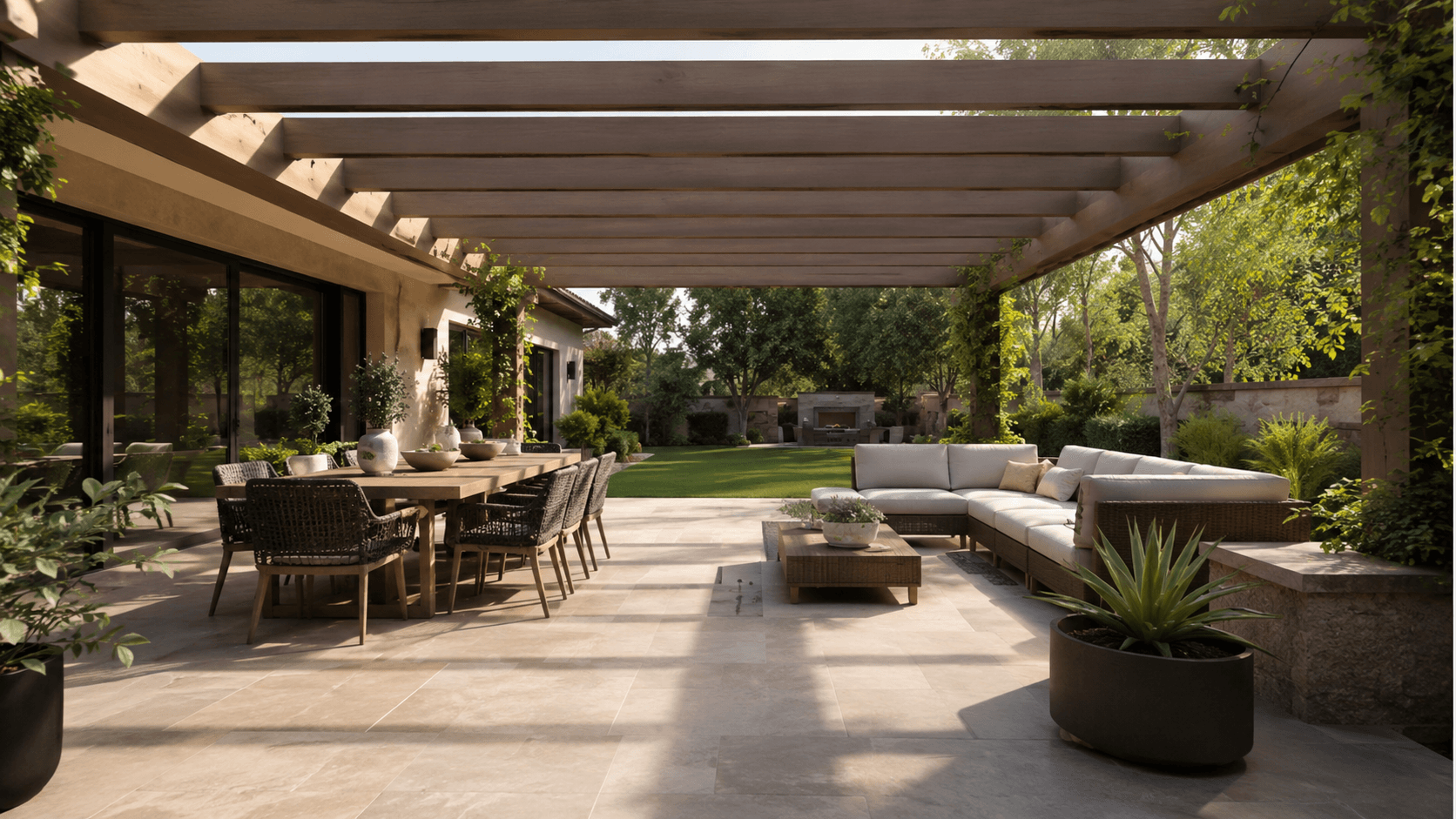
The practical advantages of adding a pergola extend from day-to-day comfort to long-term property value, and most homeowners find the return exceeds their initial expectations.
Creates a Comfortable Outdoor Living Space
A pergola transforms an unused backyard or exposed patio into a space people actually want to spend time in. By providing structure overhead and a defined footprint on the ground, it creates an outdoor room that functions the way interior rooms do, with a clear purpose, a sense of enclosure, and a focal point.
Add an outdoor sofa, a dining table, string lights, and a few potted plants, and a pergola becomes the most used space on the property through spring, summer, and fall.
Adds Shade While Letting in Natural Light
The open lattice roof of a pergola provides what solid roof covers cannot, filtered sunlight rather than full shade. Depending on the rafter spacing, a pergola blocks 50 to 70 percent of direct sun while maintaining the bright, open feel of an outdoor space.
This balance is particularly valuable in Missouri’s climate, where full shade can feel dark and enclosed but unshaded outdoor areas become too hot to use during peak summer hours. Adding a retractable canopy or shade sail between the rafters provides more coverage when needed without permanently closing off the structure.
Increases Your Home’s Curb Appeal
A well-designed pergola adds architectural interest and visual structure to a backyard that might otherwise read as flat and undeveloped. From the street or neighboring properties, a pergola signals that the outdoor space has been thoughtfully designed, which contributes to the overall impression of the home.
For cedar, redwood, or painted wood pergolas, the natural material texture adds warmth. For aluminum and vinyl pergolas, clean lines and consistent color create a modern, finished aesthetic. Either way, the visual impact is immediate and positive.
Defines Outdoor Areas for Relaxing and Entertaining
One of the most underappreciated functions of a pergola is its ability to divide a large or shapeless outdoor space into intentional zones. A pergola positioned over a dining table creates a defined dining area. A pergola over a fire pit seating arrangement creates a lounge zone. Two pergolas in a large backyard can create distinct spaces for entertaining and for quiet relaxation.
This zone-defining function is particularly valuable for homeowners with open backyards where outdoor furniture sits without context or purpose.
Each of these benefits compounds with the others, creating an outdoor space that is more comfortable, more beautiful, and more functional than the sum of its parts.
Where Can You Install a Pergola?
The right placement makes a pergola significantly more useful. The wrong placement, however well-built, leaves it underused.
Pergolas are flexible structures that work in a wide range of locations across a residential property:
- Attached to the house, mounted directly to an exterior wall, an attached pergola extends the living space of the home outward. This placement works best over back patios, sliding door or French door exits, and kitchen or living room-adjacent exterior walls. It creates the strongest visual and functional connection between indoor and outdoor spaces.
- Over a freestanding deck, a pergola built above an existing or new deck defines the deck as an outdoor room rather than just a platform. Particularly effective when the deck is large and would otherwise feel open and undefined.
- Over a patio or concrete slab, ground-mounted pergolas anchor into concrete footings or surface-mount hardware and work equally well over existing patios. No deck structure is needed.
- In a garden or yard, a freestanding pergola positioned away from the house creates a destination in the landscape, a garden room, a shaded seating area, or a decorative focal point at the end of a pathway.
- Over a pool or spa area, a pergola adjacent to a pool provides a shaded retreat from sun exposure while keeping the aesthetic open and connected to the pool environment.
- As a walkway or arbor, linear pergola structures create covered garden walkways or entry arbors, a classic landscape feature that frames pathways and supports climbing plants overhead.
Placement decisions should account for sun orientation, traffic flow, proximity to the house, and how the structure will connect to the rest of the landscape.
Popular Types of Pergolas
Pergola styles have expanded well beyond the traditional wood lattice structure. Understanding the main types helps match the right design to the intended use and property aesthetic.
- Attached pergolas connect directly to the home’s exterior wall. They share a roofline with the house, creating a seamless indoor-outdoor transition. The most popular choice for covered patio additions.
- Freestanding pergolas stand independently on their own four or more posts. Flexible in placement, they can be positioned anywhere on the property without requiring connection to the house structure.
- Vinyl pergolas are low-maintenance, UV-resistant, and available in white and neutral tones. They will not rot, peel, or require painting. Popular for homeowners who want a clean, maintenance-free structure.
- Aluminum pergolas are the strongest low-maintenance option. Powder-coated aluminum resists rust, UV fading, and moisture indefinitely. Modern aluminum pergola systems often include adjustable louvered roof panels for variable shade control.
- Wood pergolas, cedar, redwood, and pressure-treated pine are the most common wood choices. Wood offers the warmest natural aesthetic and is the most customizable material for decorative details. Requires periodic sealing or staining.
- Composite pergolas blend wood fiber and plastic for a wood-like appearance with significantly lower maintenance. Resist moisture and UV degradation better than natural wood.
- Louvered pergolas feature motorized or manually adjustable roof slats that rotate to control sun and shade. The most versatile option for year-round outdoor use.
- Shade sail pergolas, tension fabric panels stretched between posts, create a modern, geometric shade structure. Often used over pool areas and contemporary outdoor spaces.
The right pergola type is always the one that fits the intended use, the property’s architectural style, and the homeowner’s tolerance for ongoing maintenance.
How to Choose the Right Pergola for Your Home
A few key questions answered before purchase prevent the most common pergola regrets: wrong size, wrong material, wrong placement.
Define the purpose first.
Is the pergola primarily for shade, for entertaining, for supporting plants, or as a decorative garden feature? The intended use determines the right size, placement, and roof design.
Match the material to your maintenance tolerance.
Wood offers the best aesthetics but requires seasonal maintenance. Aluminum and vinyl are virtually maintenance-free but cost more upfront. Composite sits between the two in both cost and maintenance.
Size for actual use, not just the space.
A pergola should be large enough to fit the furniture or function it’s designed for with comfortable clearance. A dining pergola needs to accommodate a table plus chairs plus room to pull chairs out. A minimum of 10×12 feet for a dining area and 10×10 feet for a seating area are practical starting points.
Consider sun orientation.
A pergola on the west side of a house receives intense afternoon sun. Rafter spacing, canopy additions, and the orientation of the beams all affect how much shade the structure provides at peak afternoon hours.
Check local permit requirements.
Most Missouri jurisdictions require a building permit for attached pergolas and for any freestanding structure above a certain size. Confirm requirements with your local building department before purchasing or building.
Think about the view from inside.
An attached pergola changes what you see looking out from the home’s interior. Make sure the height, scale, and design of the structure complement both the exterior and the interior view.
The homeowners who are most satisfied with their pergolas are the ones who defined their goals clearly before choosing a style, not after.
Does a Pergola Add Value to Your Property?
Yes, a well-built pergola adds measurable value to a Missouri home, though the return varies based on materials, quality of construction, and how the structure integrates with the property.
What the data shows:
- The National Association of Realtors consistently ranks outdoor living space improvements among the top features that attract buyers
- A quality pergola covering an existing deck or patio can return 50 to 80 percent of its cost at resale, comparable to mid-range kitchen and bathroom updates
- Homes with defined, attractive outdoor living spaces sell faster and at higher prices in both the Springfield residential market and the Lake of the Ozarks vacation property market
What maximizes pergola ROI:
- Material quality, aluminum and cedar pergolas appraise and photograph better than basic pressure-treated pine structures
- Integration with surrounding landscaping, a pergola that feels designed into the property reads as a permanent feature rather than an accessory
- Size and placement, an undersized pergola that doesn’t serve a clear function adds little perceived value; one that creates an obvious and usable outdoor room adds significant appeal
A pergola is not just a lifestyle improvement, it is a property improvement that pays dividends both in daily enjoyment and at the point of resale.
Why Choose a Professional Pergola Builder?
A pergola looks simple to build, and the basic structure is not complicated. What separates a professional installation from a DIY build is the quality of the foundation, the structural connections, and the finished result.
- Proper structural engineering: A professionally built pergola is designed for the specific post spacing, beam spans, and local wind and snow load requirements of your property. Undersized beams and improperly anchored posts are the most common failure points in DIY pergola builds.
- Permit management: Most attached pergolas and many freestanding structures require a building permit. A professional builder navigates this process on your behalf and ensures the structure passes inspection.
- Material sourcing and quality: Professional builders have access to better-grade materials and established supplier relationships. The difference between contractor-grade cedar and box-store cedar is significant in both appearance and longevity.
- Correct anchoring and footings: Post anchoring is the most structurally critical part of any pergola installation. Ground-set posts require proper concrete footings at the correct depth for your frost line. Surface-mount hardware must be rated for the post size and wind load. Getting this wrong leads to leaning, shifting, and structural failure.
- Finished quality: Professional carpenters produce cleaner joinery, tighter fits, and better-finished details than most homeowners can achieve with basic tools. The visual difference between a professionally built pergola and a DIY build is usually obvious and affects property value accordingly.
Hiring a qualified builder costs more upfront and delivers a structure that performs better, looks better, and lasts significantly longer than most DIY alternatives.
Final Thoughts
A pergola is one of the most functional and visually impactful additions you can make to a Missouri outdoor space. It creates shade without enclosure, defines a purpose for an otherwise unused area, and adds architectural appeal that improves both daily enjoyment and property value.
Whether you choose wood, aluminum, or vinyl, attached or freestanding, simple or louvered, the best pergola is one that matches how you actually use your outdoor space and fits the style of your home. Plan it carefully, build it well, and it will serve your property for decades.
FAQs
What Is The Main Purpose Of A Pergola?
A pergola’s primary purpose is to define an outdoor space, provide partial shade while maintaining an open, airy feel, and support outdoor living features like string lights, climbing plants, and shade sails. It creates a usable outdoor room without the enclosed feeling of a solid roof structure.
Does A Pergola Provide Enough Shade?
A standard pergola with typical rafter spacing blocks 50 to 70 percent of direct sunlight. For additional shade, a retractable canopy, shade sail, or louvered roof system can be added. For full rain and sun protection, a solid patio cover is the more appropriate structure.
How Long Does A Pergola Last?
Lifespan depends on the material. Cedar and redwood pergolas last 15 to 25 years with periodic maintenance. Pressure-treated pine lasts 10 to 15 years maintained. Aluminum pergolas last 30 to 50 years with minimal upkeep. Vinyl pergolas have a similar long-term performance profile to aluminum.
Do I Need A Permit To Build A Pergola In Missouri?
In most Missouri jurisdictions, yes. Attached pergolas almost always require a building permit. Freestanding pergolas above a certain size, typically 200 square feet, also require permits in most cities and counties. Always confirm with your local building department before starting any pergola project.
What Is The Difference Between A Pergola And A Patio Cover?
A pergola has an open lattice roof that allows light and airflow to pass through. A patio cover has a solid or insulated roof that provides full weather protection. A pergola is better suited for partial shade and outdoor aesthetics; a patio cover is better suited for year-round weather protection.
What Materials Are Best For A Pergola In Missouri’s Climate?
Aluminum and cedar are the top-performing materials for Missouri’s climate. Aluminum resists rust, UV fading, and moisture indefinitely. Cedar has natural rot resistance and handles Missouri’s humidity and freeze-thaw cycles better than pressure-treated pine. Both outperform vinyl in structural rigidity under wind load.
How Much Does It Cost To Build A Pergola?
Pergola costs in Missouri typically range from $3,000 to $8,000 for a professionally installed wood or vinyl structure, and $6,000 to $20,000 or more for aluminum louvered systems or larger custom builds. Size, material, and design complexity are the primary cost drivers.
Can A Pergola Be Attached To Any House?
Most homes can accommodate an attached pergola, but the connection point must be structurally sound. The ledger board attaches to the home’s rim joist or structural wall framing, not just the siding. A professional builder confirms structural compatibility before installation.
What Can I Put On A Pergola To Make It More Functional?
String lights, outdoor ceiling fans, shade sails, retractable canopies, outdoor curtains, climbing plants, hanging planters, and heaters are all popular pergola additions. Louvered pergola systems with motorized roof panels are the most functional option for year-round use in Missouri’s variable climate.
Is A Pergola Worth The Investment?
For most Missouri homeowners, yes. A quality pergola creates a more usable and enjoyable outdoor space, improves property aesthetics, and returns 50 to 80 percent of its cost at resale. In the Lake of the Ozarks vacation rental market, a well-placed pergola can directly increase rental appeal and occupancy rates.