A pool deck does more than surround your pool, it defines how your entire backyard looks and functions. The right design creates a safe, comfortable, low-maintenance outdoor space that holds up through Missouri’s hot summers, heavy rainfall, and cold winters.
Whether you’re working with a small backyard in Springfield or a sprawling lakefront property in Camdenton, this guide covers the best pool deck ideas, materials, costs, and design decisions for Missouri homeowners.
Best Pool Deck Design Ideas for Every Home Style
Choosing the right pool deck design transforms your backyard from a simple swimming area into a functional, beautiful outdoor living space. Homeowners face unique considerations, hot humid summers, freeze-thaw winter cycles, and heavy spring rainfall all influence which materials and layouts hold up best over time. Whether you are building a new pool deck or renovating an existing one, these design ideas cover every style, budget, and backyard size.
Modern Concrete Pool Deck Designs for a Clean Look
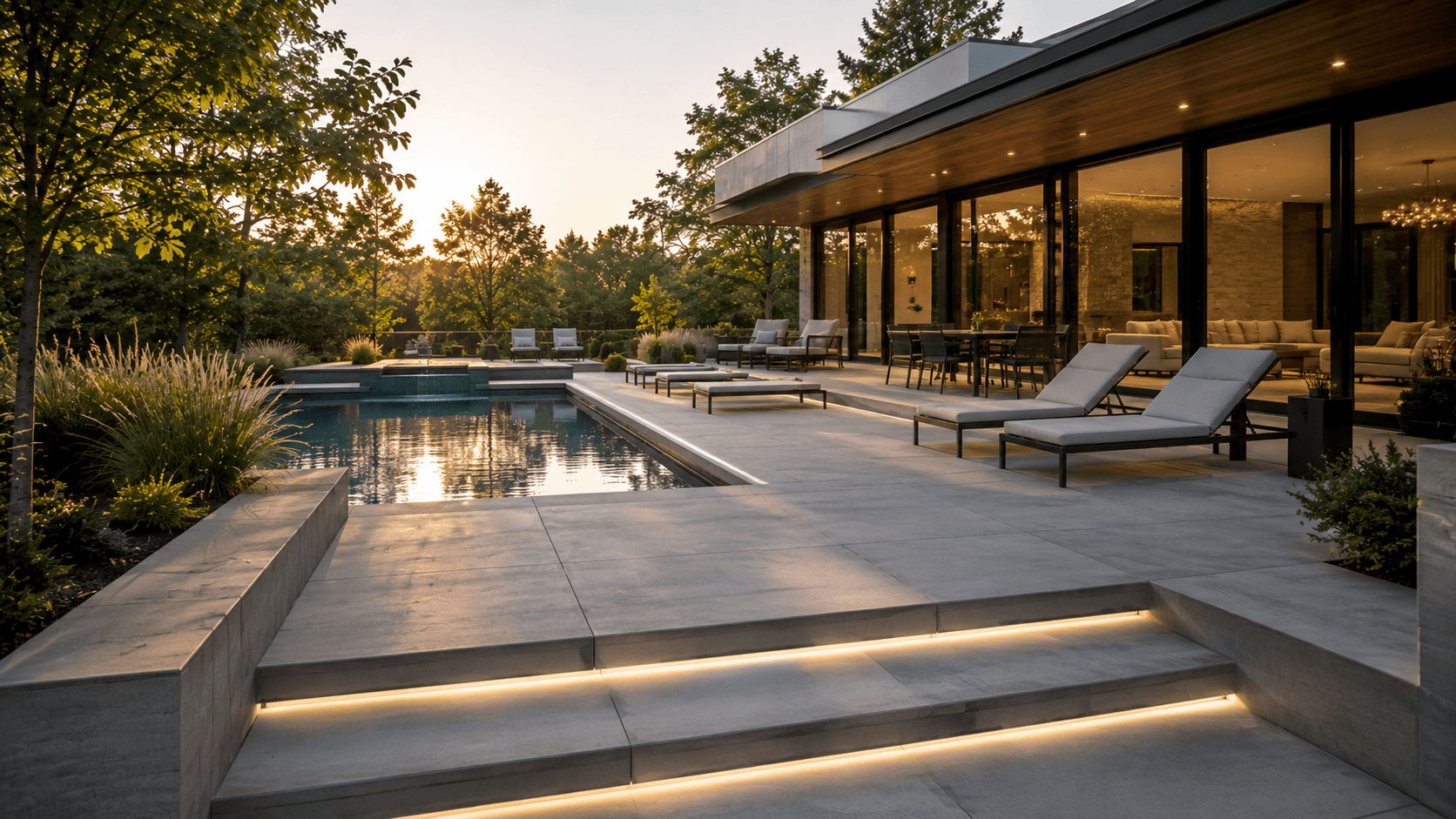
Modern concrete pool decks are one of the most popular choices among homeowners for good reason. They offer a sleek, minimalist aesthetic that complements contemporary home architecture while delivering exceptional durability against seasonal weather extremes.
Key design features:
- Smooth or brushed concrete finishes in neutral tones, gray, charcoal, or warm white
- Clean straight lines with defined edges and geometric shapes
- Integrated drainage channels for efficient water runoff
- Anti-slip surface treatments for wet-area safety
- Seamless transitions between the pool coping and deck surface
Why it works: Concrete handles freeze-thaw cycles well when properly sealed and reinforced. A quality concrete sealer applied every 2 to 3 years prevents moisture infiltration that causes cracking during winter temperature swings.
Best for: Homeowners who want a low-profile, contemporary look with long-term durability and minimal ongoing maintenance.
Natural Stone Pool Deck Ideas for a Premium Finish
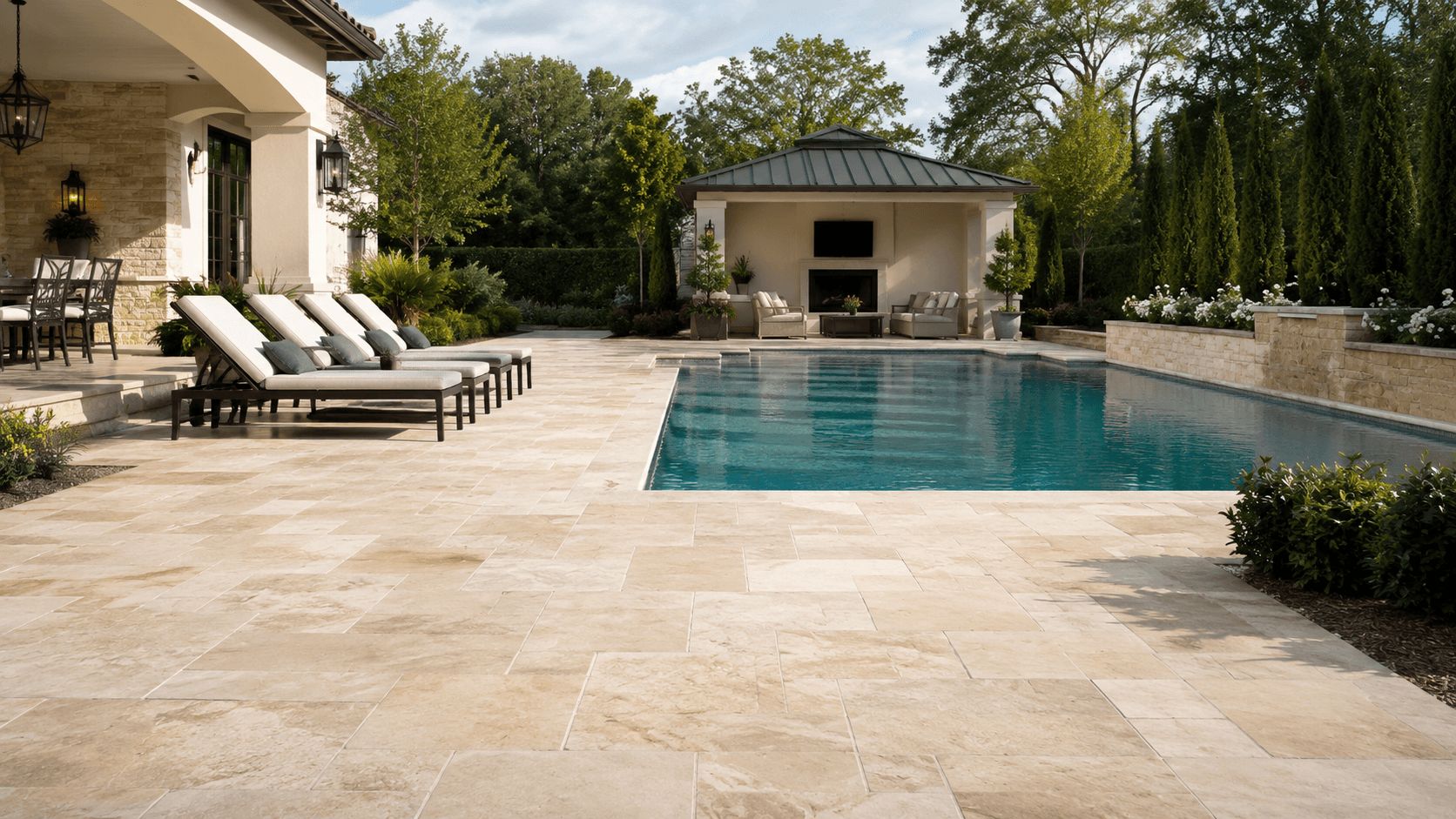
Natural stone pool decks deliver an upscale, timeless appearance that no manufactured material fully replicates. Travertine, bluestone, limestone, and slate are all viable options for outdoor spaces, each offering distinct color tones and surface textures.
Popular natural stone choices for pool decks:
| Stone Type | Appearance | Heat Retention | Slip Resistance | Cost Level |
| Travertine | Warm ivory and tan tones | Low, stays cool | High (tumbled finish) | Premium |
| Bluestone | Blue-gray, sophisticated | Moderate | High (natural cleft) | Premium |
| Limestone | Soft beige and cream | Low to moderate | Moderate | Mid to Premium |
| Slate | Dark charcoal, rich texture | Moderate | High | Mid to Premium |
Why it works: Travertine in particular is an excellent choice for hot summers because its porous surface stays noticeably cooler underfoot than solid concrete or dark stone. Proper sealing is essential to prevent moisture absorption during heavy rainfall and winter freeze cycles.
Best for: Homeowners seeking a high-end, resort-style aesthetic with natural variation in color and texture across the deck surface.
Wooden Pool Deck Styles for a Warm Outdoor Feel
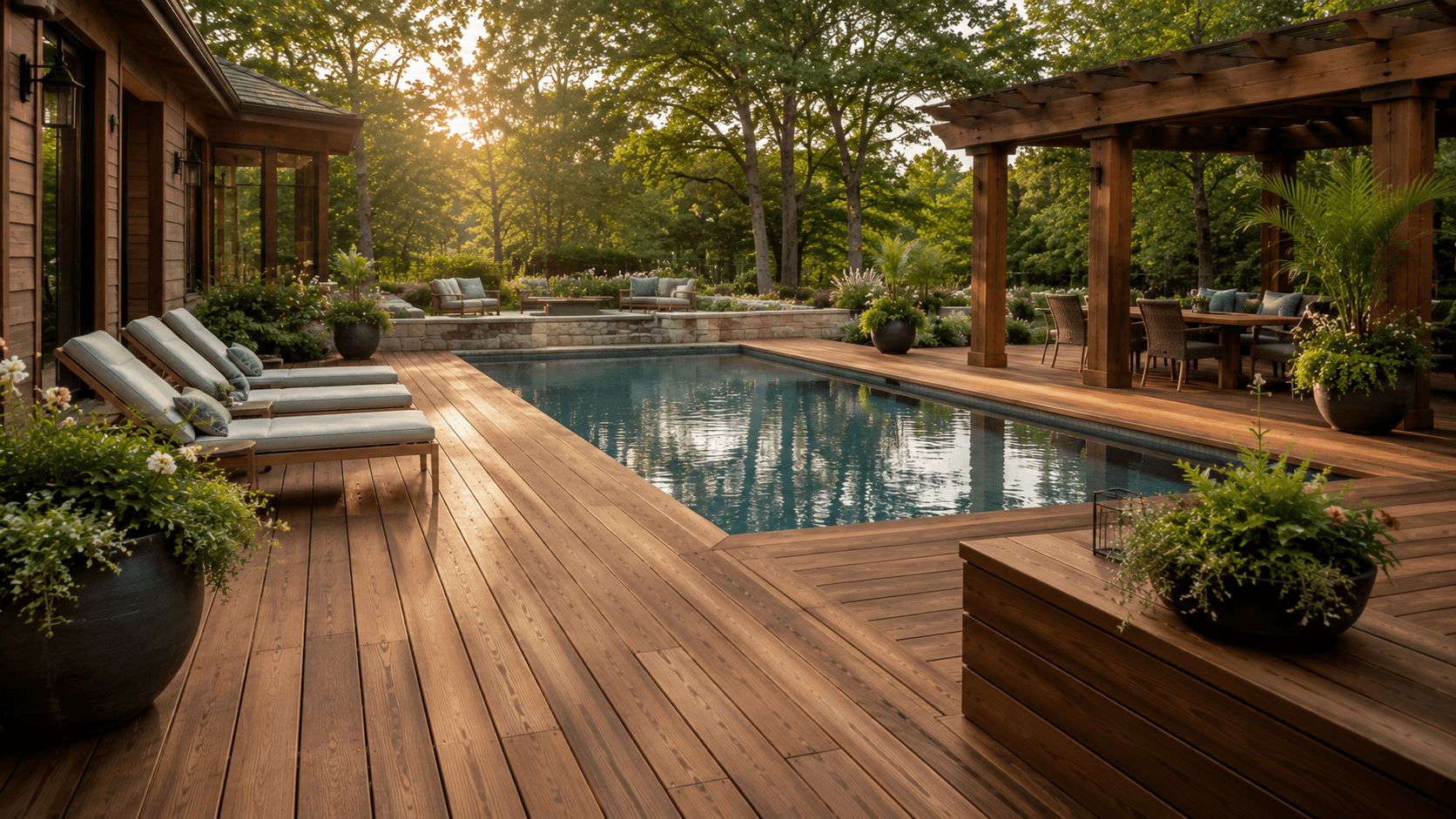
Wood pool decks bring warmth, natural character, and a relaxed outdoor atmosphere that stone and concrete cannot match. For backyards surrounded by mature trees or natural landscaping, a wooden deck blends seamlessly into the environment.
Best wood options for pool decks:
- Pressure-treated pine, most affordable, widely available, requires regular sealing
- Cedar, naturally rot-resistant, attractive grain, mid-range cost
- Redwood, premium appearance and durability, higher cost
- Composite decking (wood-alternative), low maintenance, resistant to humidity and UV fading, increasingly popular
Design considerations: Humidity and seasonal rainfall create challenging conditions for untreated or poorly maintained wood. Annual sealing and staining are essential to prevent warping, splintering, and mildew growth. Many homeowners are shifting toward composite decking materials that deliver the warm visual appeal of wood without the intensive upkeep requirements.
Best for: Homeowners who want a natural, inviting outdoor aesthetic and are committed to regular maintenance, or those who prefer composite alternatives for the same look with less effort.
Stamped Concrete Pool Deck Patterns for Visual Appeal
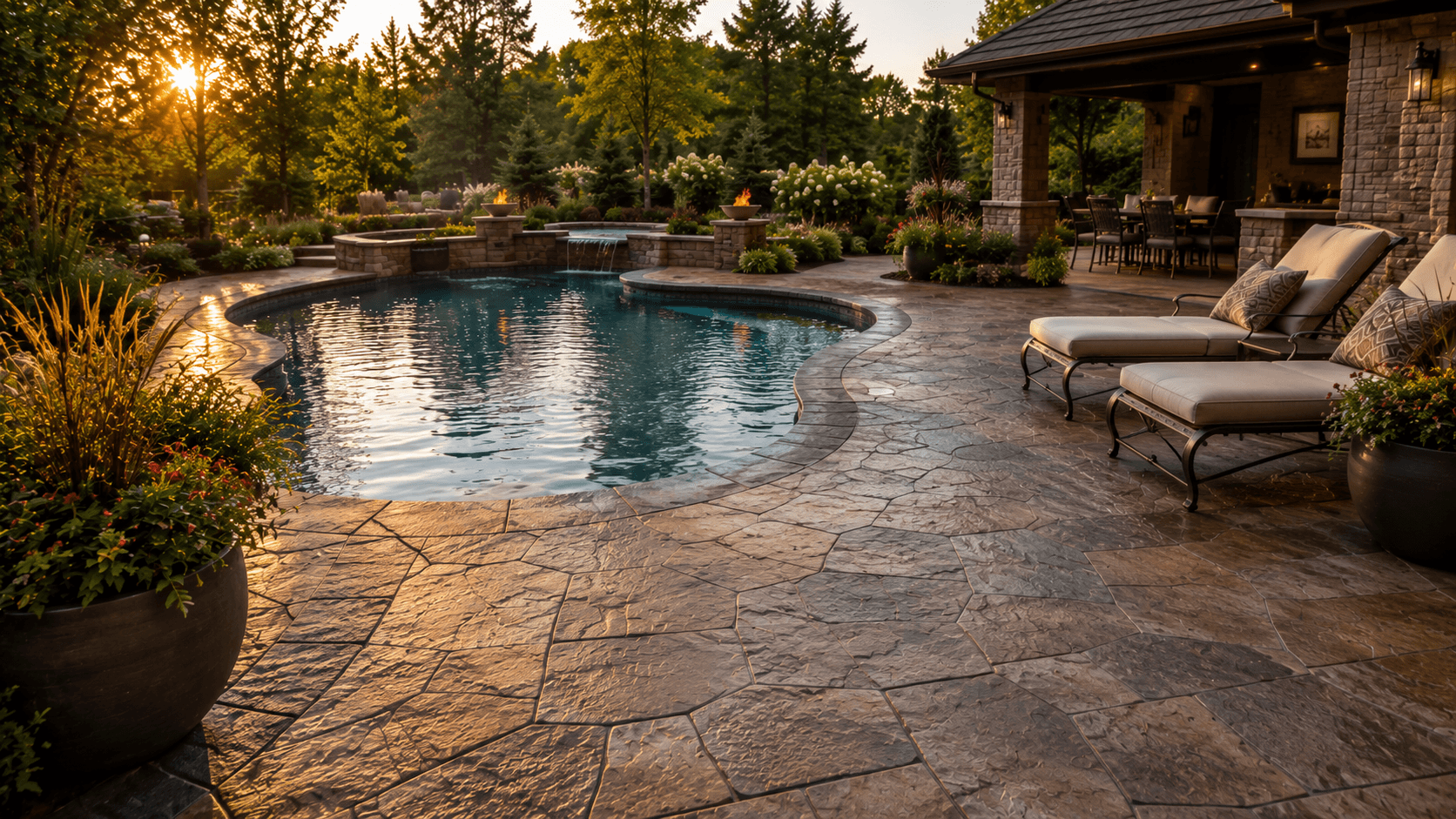
Stamped concrete gives homeowners the visual richness of stone, brick, or tile at a fraction of the material cost. The concrete is poured and then stamped with textured molds before curing, creating realistic surface patterns in virtually any color combination.
Popular stamped concrete patterns for pool decks:
- Ashlar slate, irregular stone pattern, highly realistic
- Cobblestone, classic European street aesthetic
- Wood plank mimics natural wood grain without maintenance demands
- Flagstone, organic, natural stone appearance
- Herringbone brick, structured, traditional look
Color options: Integral color, surface-applied stains, and antiquing releases can be combined to create multi-tone finishes that closely replicate natural materials. Earth tones, sandstone, terra cotta, charcoal, and warm gray are the most popular choices for pool decks.
Why it works: Stamped concrete is cost-effective, highly customizable, and durable when properly sealed. Resealing every 2 to 3 years maintains the color vibrancy and protects the surface from winter moisture infiltration.
Best for: Homeowners who want the decorative appeal of premium materials at a more accessible price point without sacrificing visual impact.
Minimalist Pool Deck Designs for Small Spaces
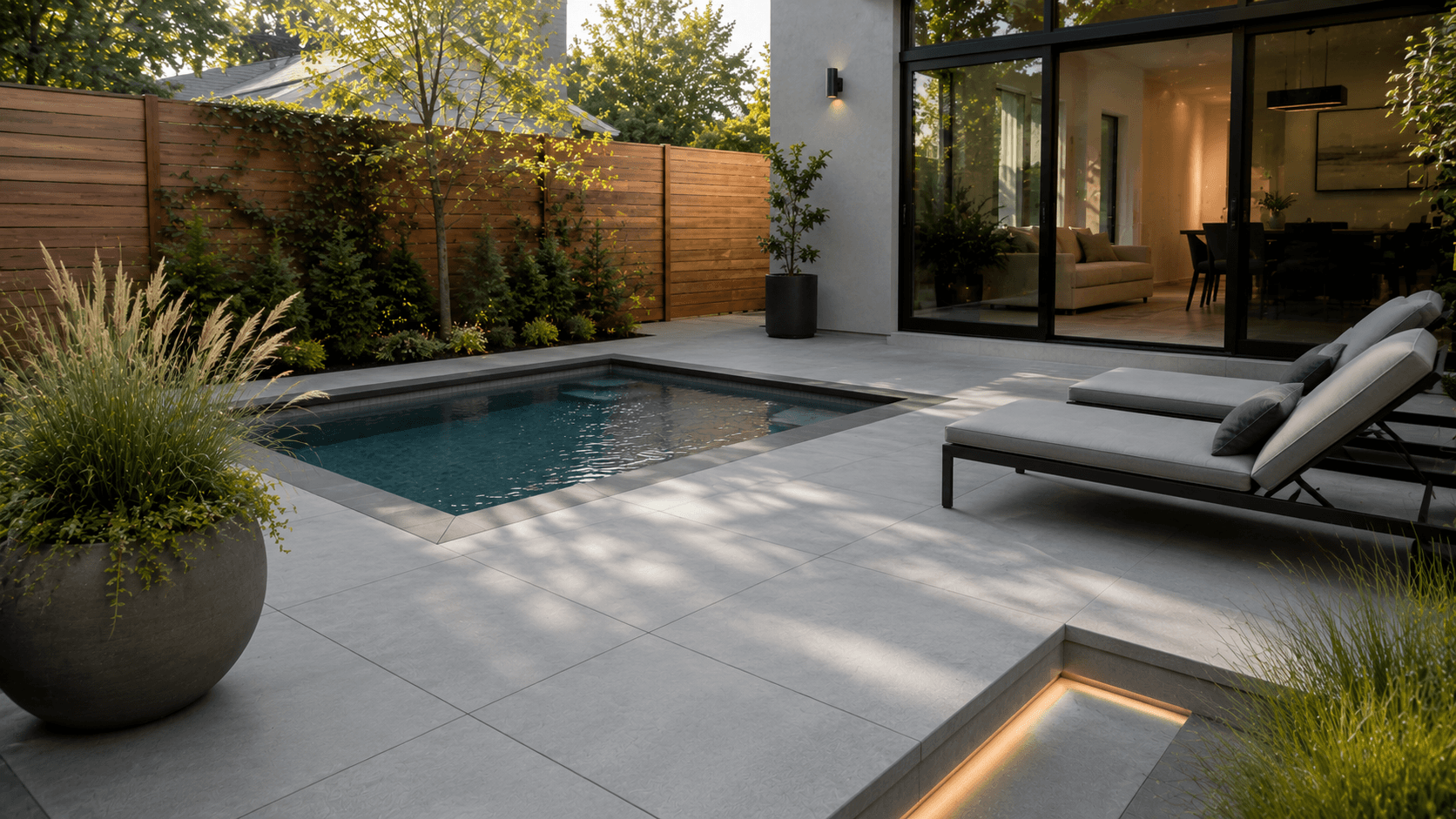
A smaller backyard does not mean sacrificing style or functionality. Minimalist pool deck design principles, clean lines, limited color palettes, and deliberate use of space, can make a compact outdoor area feel intentional, open, and visually impressive.
Key principles for minimalist pool decks:
- Keep the color palette simple, two tones maximum, typically a light deck surface paired with darker coping
- Use large-format pavers or seamless concrete to reduce visual clutter
- Eliminate unnecessary borders and decorative edging
- Integrate built-in storage benches to reduce freestanding furniture footprint
- Use vertical landscaping along fence lines to draw the eye upward and create perceived depth
Space-saving layout ideas:
- Narrow perimeter deck with wider entry points at steps and shallow end
- Flush coping that transitions directly to lawn or landscaping without wide borders
- Compact rectangular or lap pool format to maximize usable deck width on all sides
Best for: Homeowners with smaller backyards who want a clean, purposeful outdoor space that feels larger and more curated than its actual footprint suggests.
Curved Pool Deck Layouts for Luxury Backyard Spaces
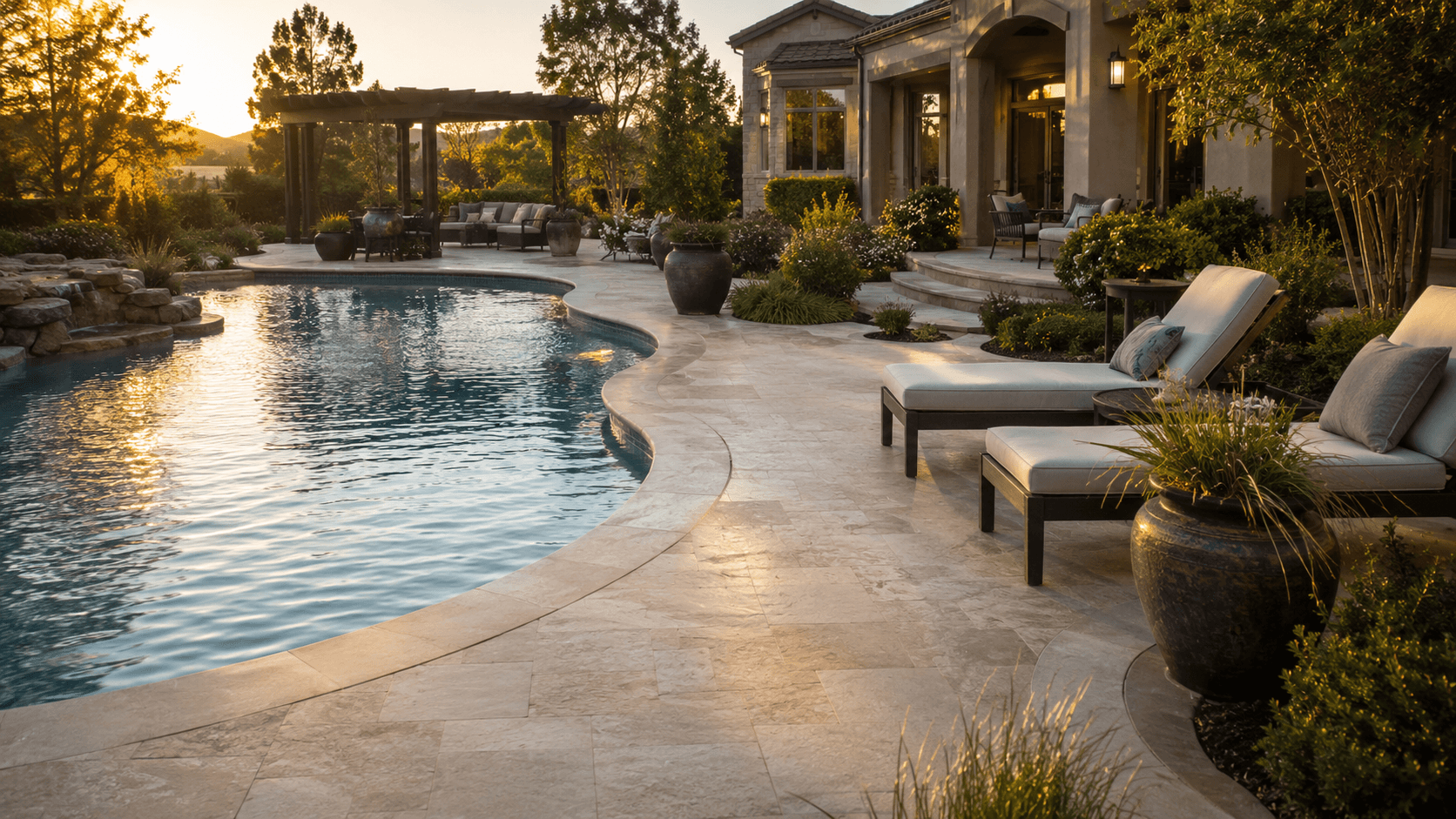
Curved pool decks move away from rigid geometry and introduce flowing, organic lines that create a resort-like atmosphere in residential backyard settings. When the pool shape itself features curves, the surrounding deck should complement and extend those lines naturally.
Design elements of a luxury curved pool deck:
- Sweeping deck edges that follow the pool’s organic shape
- Freeform natural stone or large-format paver installation
- Curved seating walls built into the deck perimeter
- Integrated fire features or water features at focal points
- Layered landscaping with tropical plants and lighting for evening ambiance
Material recommendations for curved layouts: Irregular flagstone, tumbled travertine, and freeform stamped concrete all adapt well to curved layouts. Large-format square pavers require precise cutting to follow curves cleanly, a task that adds labor cost but produces a refined, high-end result.
Best for: Homeowners with larger backyards and higher renovation budgets who want a distinctive, luxury outdoor living space that stands out from standard residential designs.
Multi-Level Pool Deck Designs for Large Outdoor Areas
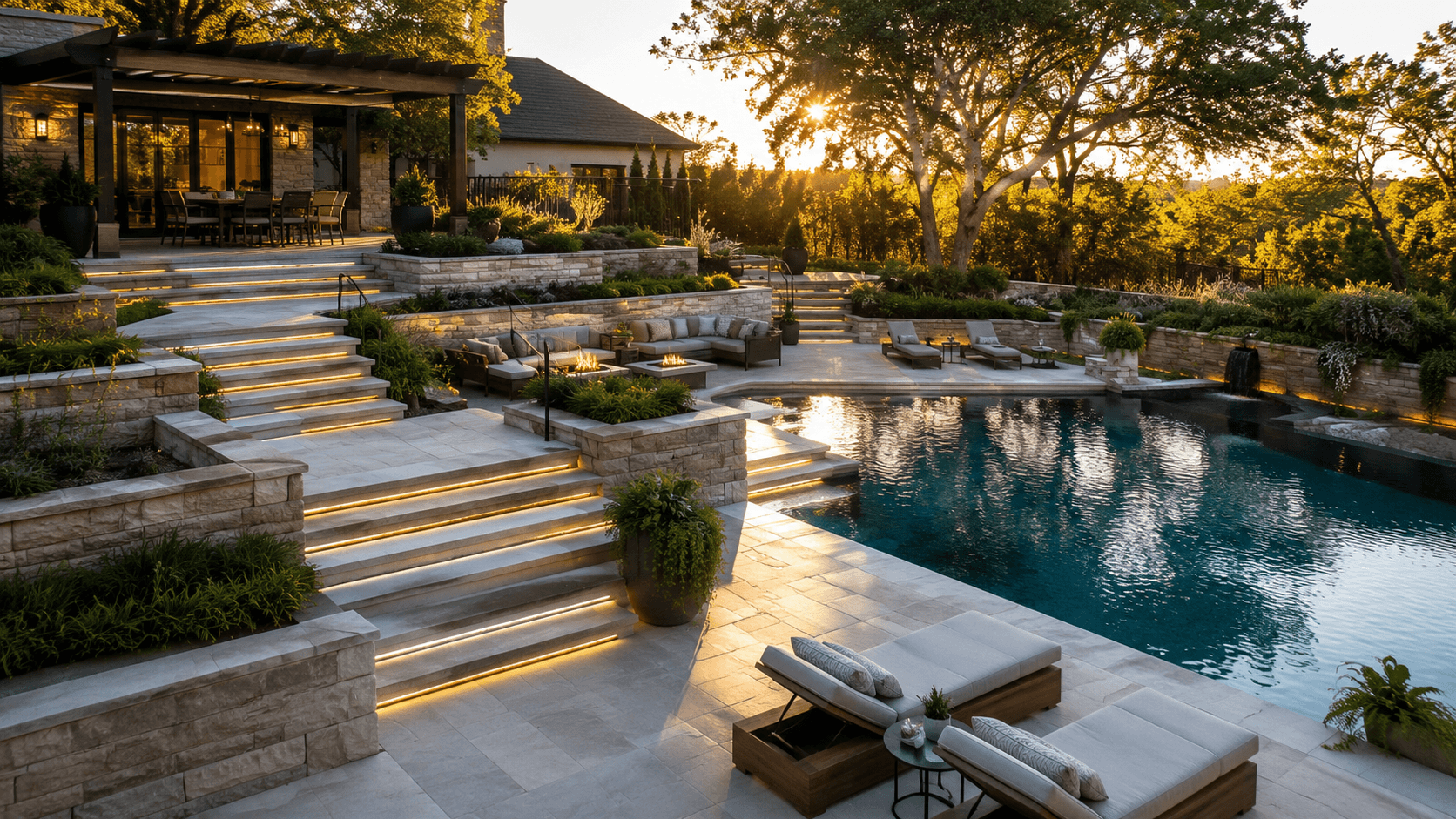
Multi-level pool decks maximize the potential of a large backyard by creating distinct zones for different activities, lounging, dining, entertaining, and swimming, each on its own defined platform connected by steps or gradual transitions.
Common multi-level pool deck configurations:
- Upper level: outdoor dining area or covered pergola with shade structure
- Mid level: lounge seating area with direct pool visibility
- Lower level: pool surround with coping and wet-area deck space
- Optional: sunken fire pit area or integrated hot tub platform
Design and material tips: Consistency in materials across all levels creates visual cohesion in a multi-level design. Using the same paver, stone, or concrete finish throughout while varying the layout and elevation prevents the design from feeling disjointed or overly busy.
Structural considerations: Multi-level decks built on sloped terrain require proper grading, drainage, and retaining wall engineering. Heavy spring rainfall makes drainage planning a non-negotiable part of any multi-level deck project, improper grading leads to water pooling and accelerated surface deterioration.
Best for: Homeowners with large, potentially sloped backyards who want to create a fully functional outdoor living environment rather than a simple pool surround.
Pool Deck Ideas with Built-In Seating and Lounging Areas
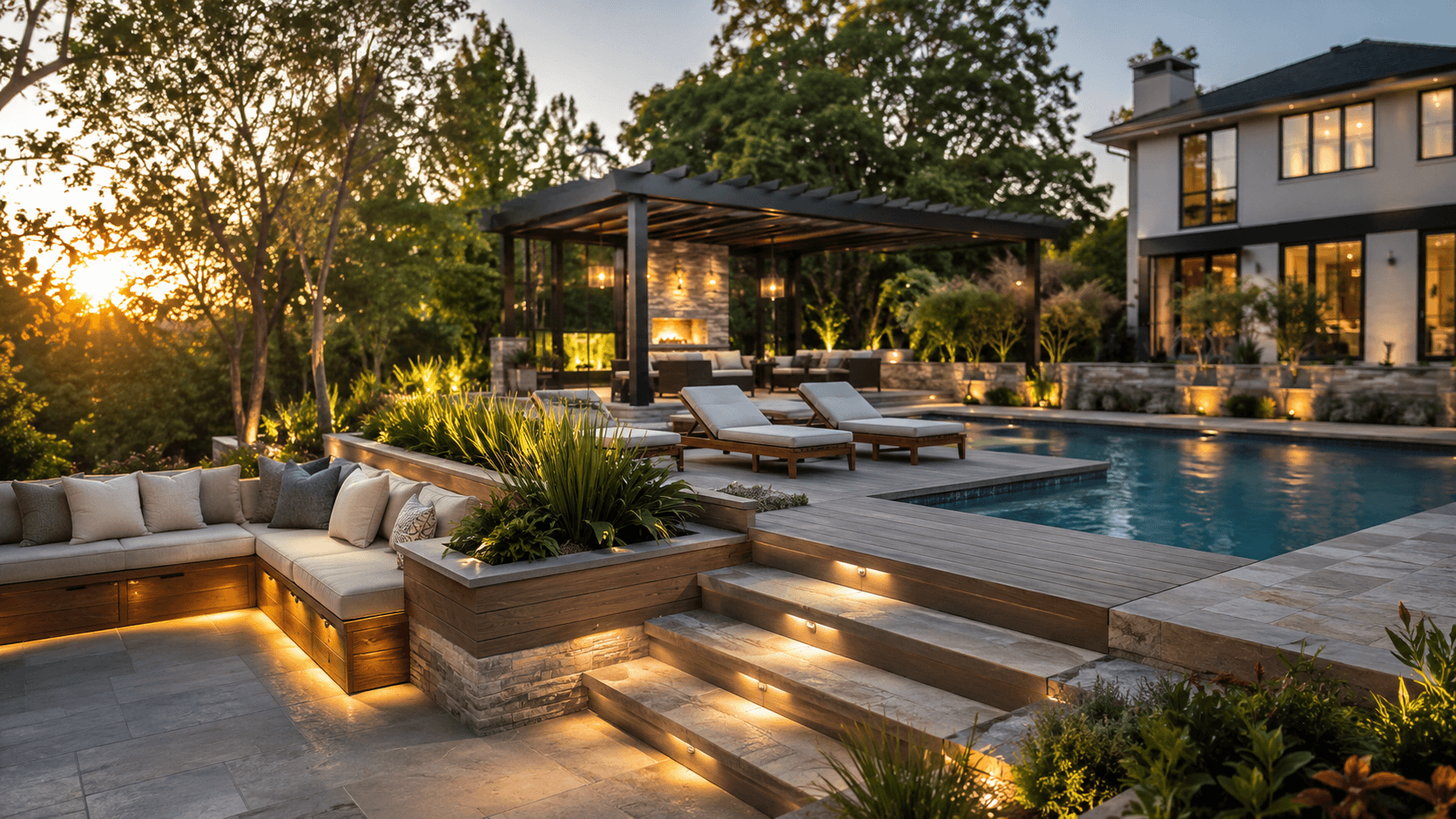
Built-in seating transforms a pool deck from a purely functional wet-area surface into a true outdoor living room. Integrated benches, raised lounging platforms, and built-in daybeds eliminate the need for moveable furniture and give the space a polished, permanent feel.
Popular built-in seating options for pool decks:
- Concrete bench walls along deck perimeter, durable, weather-resistant, low maintenance
- Raised tanning ledge or baja shelf built into the pool’s shallow end
- Built-in chaise lounge platforms at deck level with drainage channels
- Corner bench seating surrounding a built-in fire pit or outdoor kitchen area
- Curved seating walls following the pool’s edge for a seamless design flow
Material and cushion considerations: Built-in concrete or stone seating is virtually maintenance-free in any climate. Adding removable outdoor cushions in weather-resistant fabric brings comfort without the permanence, and they can be stored indoors during winter months to extend their lifespan.
Best for: Homeowners who entertain regularly and want a complete, furniture-ready outdoor living space that requires minimal seasonal setup and takedown each year.
Low-Maintenance Pool Deck Designs for Missouri Weather
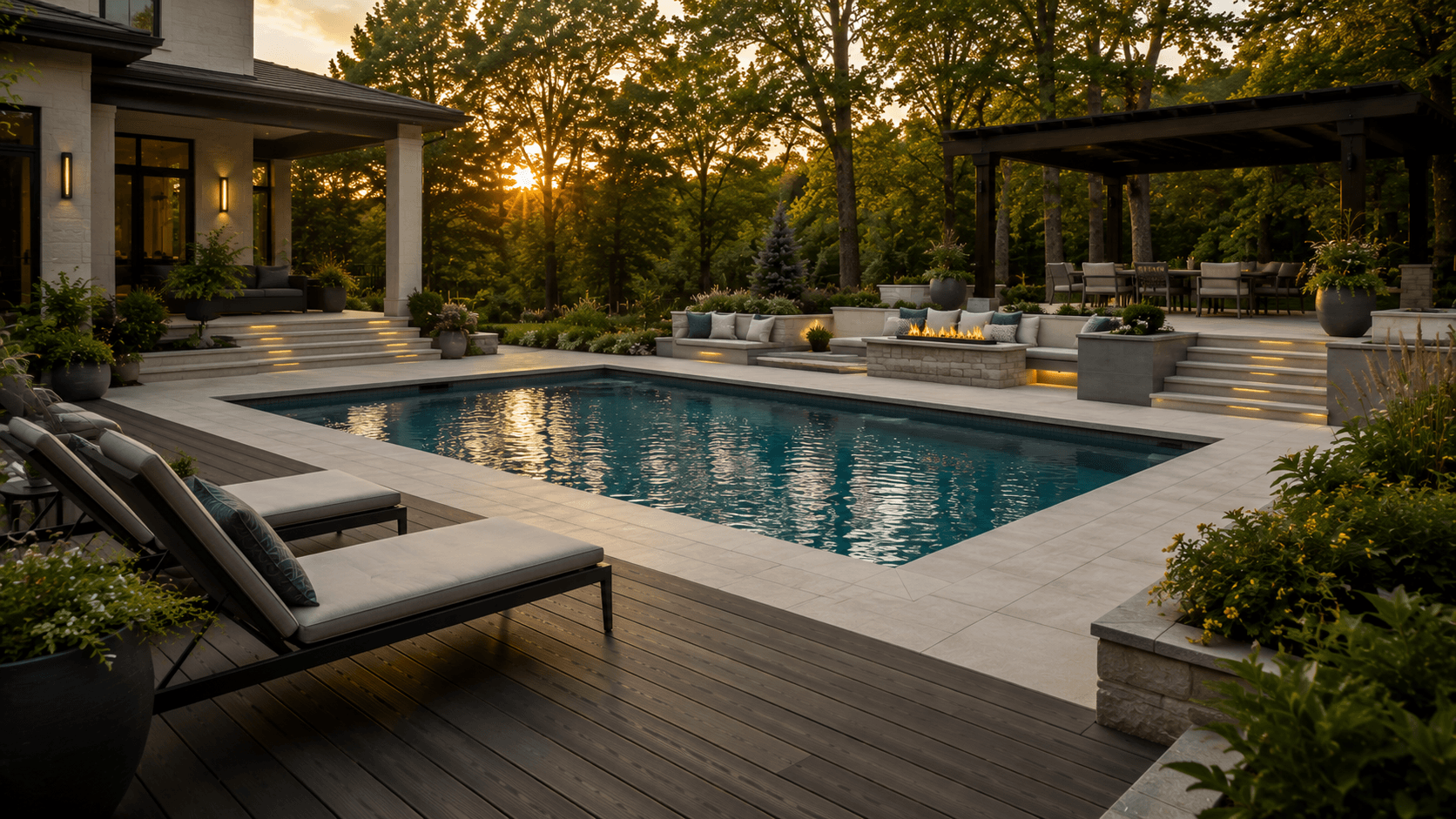
Missouri’s climate is demanding on outdoor surfaces. Hot summers with intense UV exposure, freeze-thaw winter cycles, heavy spring rainfall, and high humidity all accelerate wear on pool deck materials that are not chosen and maintained carefully.
Best low-maintenance materials for Missouri pool decks:
| Material | Maintenance Level | Missouri Weather Performance |
| Composite decking | Very Low | Excellent, resists UV, humidity, and moisture |
| Porcelain pavers | Very Low | Excellent, frost-resistant, non-porous |
| Concrete (sealed) | Low | Very Good, requires resealing every 2–3 years |
| Travertine (sealed) | Low to Moderate | Very Good, stays cool, requires sealing |
| Pressure-treated wood | High | Fair, requires annual sealing and staining |
| Natural slate | Moderate | Good, durable but needs periodic resealing |
Low-maintenance design practices:
- Choose light-colored surfaces that reflect heat and show less UV fading over time
- Install proper perimeter drainage to prevent standing water after rainstorms
- Apply a penetrating sealer to all porous surfaces before the first winter
- Use porcelain or composite coping that does not absorb moisture at the pool edge
Best for: Missouri homeowners who want a beautiful, durable pool deck that holds up through every season without demanding significant time, cost, or effort to maintain year after year.
Cost of Building a Pool Deck in Missouri
Pool deck costs in Missouri vary based on material, size, design complexity, and location. Here’s what homeowners typically pay:
| Material | Cost per Sq Ft | 400 Sq Ft Deck | 600 Sq Ft Deck |
| Broom-finish concrete | $6 – $12 | $2,400 – $4,800 | $3,600 – $7,200 |
| Stamped concrete | $12 – $22 | $4,800 – $8,800 | $7,200 – $13,200 |
| Pressure-treated wood | $15 – $25 | $6,000 – $10,000 | $9,000 – $15,000 |
| Composite decking | $25 – $50 | $10,000 – $20,000 | $15,000 – $30,000 |
| Pavers (travertine/bluestone) | $20 – $40 | $8,000 – $16,000 | $12,000 – $24,000 |
| Porcelain tile | $20 – $45 | $8,000 – $18,000 | $12,000 – $27,000 |
Additional cost factors to budget for:
- Site preparation and grading: $500 – $2,500
- Pool coping installation: $30 – $60 per linear foot
- Drainage system: $800 – $3,000
- Lighting: $1,500 – $5,000
- Permits (Springfield / Camdenton): $150 – $500
Labor in Springfield typically runs 10–15% lower than in Kansas City and St. Louis. Camdenton and lake-area builds carry a 10–20% premium due to rural contractor availability.
Always get three itemized quotes before committing, pool deck pricing in Missouri varies significantly between contractors even for identical scopes of work.
How Weather Affects Pool Deck Materials
Climate creates specific challenges for pool deck materials that homeowners need to factor into every material decision.
Summer Heat And UV Exposure
Missouri summers regularly exceed 90°F. Dark-colored concrete and composite surfaces absorb heat and become uncomfortable underfoot. Light-colored materials, travertine pavers, and composite boards with UV-stable finishes stay cooler and resist color fading.
Humidity And Moisture
Missouri averages 40+ inches of annual rainfall. Constant pool splash combined with ambient humidity accelerates wood degradation, promotes mildew growth, and causes untreated concrete to absorb water and stain. Sealed concrete, composite, and natural stone handle this environment best.
Freeze-Thaw Cycles
Winter freeze-thaw cycles are the most damaging force on pool deck surfaces. Water infiltrates micro-cracks, freezes, expands, and breaks surfaces apart from within. Properly sealed concrete with control joints, composite boards, and dense natural stone pavers resists freeze-thaw damage better than wood or unsealed concrete.
Spring Storms And Drainage
Missouri’s heavy spring rainfall demands proper deck drainage design. Flat or improperly sloped decks pool water, accelerate surface deterioration, and create slip hazards. A minimum 1/8 inch per foot slope away from the pool and home is the standard drainage specification.
Choosing a pool deck material without considering the full climate cycle is one of the most common and most expensive mistakes homeowners make.
Pool Deck Maintenance Tips for Long-Term Use
Consistent maintenance is what separates a pool deck that looks great after 15 years from one that needs replacing after 7.
Concrete pool decks:
- Reseal every 2–3 years to prevent water absorption and surface staining
- Clean with a pH-neutral deck cleaner, avoid acid-based products that degrade sealers
- Fill and reseal control joint cracks promptly before water infiltration widens them
Wood pool decks:
- Sand, clean, and reseal or restain every 1–2 years
- Inspect boards annually for soft spots, splinters, and fastener corrosion
- Keep the area beneath the deck clear to allow airflow and prevent moisture buildup
Composite pool decks:
- Wash with mild soap and water twice a year
- Remove leaf and debris buildup promptly, organic material traps moisture and promotes mildew
- No staining or sealing required, just keep the surface clean
All pool deck types:
- Check and clear drainage channels after every major storm
- Inspect pool coping annually for cracking or separation
- Address any surface lifting, cracking, or soft spots immediately, small issues become expensive repairs when left unattended through winter
A simple seasonal maintenance routine keeps pool deck repair costs minimal and extends the surface life well beyond what a neglected deck will deliver.
Common Pool Deck Design Mistakes to Avoid
These are the decisions homeowners most often regret after their pool deck is built:
- Choosing appearance over slip resistance: A beautiful smooth concrete or polished stone surface becomes a liability around a pool. Always prioritize wet-surface traction rating over aesthetics.
- Skipping proper drainage design: Flat decks that pool water after rain degrade faster and create safety hazards. Drainage slope and channel placement should be engineered into the design, not added as an afterthought.
- Underestimating the impact of heat absorption: Dark-colored materials in direct summer sun become too hot to walk on barefoot. Test material surface temperatures in direct sunlight before finalizing your choice.
- Building too close to the water’s edge: Insufficient coping width between the pool edge and deck surface makes maintenance difficult and creates a safety gap. A minimum 12–18 inch coping border is the standard recommendation.
- Ignoring local permit requirements: Pool decks in Missouri require building permits in most jurisdictions. Unpermitted work creates problems during home sales and may require costly removal or remediation.
- Choosing the lowest bid without reviewing scope: Pool deck quotes that seem unusually low frequently exclude site preparation, drainage, coping, or sealing. Always compare itemized quotes, not just total numbers.
- Not planning for furniture and shade: A pool deck designed without accounting for furniture placement, umbrella anchor points, or shade structure locations often ends up feeling cramped and impractical once furnished.
The best pool deck designs are the ones that anticipate how the space will actually be used, not just how it will look in a rendering.
Final Thoughts
Building a pool deck is one of the most impactful outdoor investments you can make, but the material, design, and contractor decisions you make upfront determine whether it performs for 10 years or 30. Match your material to climate demands, prioritize slip resistance and drainage from the start, and stay on a consistent maintenance schedule. Whether you’re working with a modest Springfield backyard or a premium Camdenton lakefront property, the right pool deck design adds lasting value and enjoyment to your home.
FAQs
What Is The Best Pool Deck Material For Missouri’s Climate?
Stamped or brushed concrete, composite decking, and natural stone pavers are the top performers in Missouri’s climate. All three handle freeze-thaw cycles, humidity, and UV exposure better than untreated wood or unsealed surfaces.
How Much Does A Pool Deck Cost In Missouri?
Most Missouri homeowners pay $6–$50 per square foot depending on material. A standard 400 sq ft concrete pool deck runs $2,400–$8,800. Composite and natural stone decks cost more, $10,000–$20,000 for the same size.
Do I Need A Permit To Build A Pool Deck?
Yes, in most jurisdictions. Pool decks require a building permit and must meet local code requirements for drainage, structural load, and safety. Check with Springfield Building Development Services or Camden County before starting any work.
What Pool Deck Material Stays Coolest In Summers?
Travertine pavers and light-colored concrete stay the coolest underfoot in direct summer sun. Dark composite and concrete surfaces absorb more heat. If barefoot comfort in summer is a priority, light-toned natural stone is the best choice.
How Do I Make A Small Pool Deck Feel Larger?
Use continuous light-colored paving, built-in seating instead of freestanding furniture, and clean geometric layouts that eliminate visual clutter. Vertical plantings along the perimeter add privacy without consuming deck space.
How Long Does A Pool Deck Last?
Properly maintained concrete lasts 25–30 years. Composite decking carries 25–30 year warranties. Pressure-treated wood lasts 10–15 years with consistent maintenance. Natural stone pavers can last 30–50 years with proper installation and sealing.
What Is The Most Slip-Resistant Pool Deck Surface?
Exposed aggregate concrete and textured rubber coatings offer the highest wet-surface slip resistance. Brushed concrete and travertine pavers also perform well. Avoid smooth concrete, polished stone, and untreated wood around pool areas.
How Often Should A Pool Deck Be Resealed?
Concrete pool decks should be resealed every 2–3 years. Wood decks need resealing or restaining every 1–2 years. Composite decks don’t require sealing, just periodic cleaning. Humidity and rainfall push resealing timelines toward the shorter end of each range.
Can I Build A Pool Deck Myself?
Simple concrete or paver pool decks are within reach for experienced DIYers. However, drainage engineering, coping installation, and permit compliance are areas where professional expertise pays off. Most homeowners hire professionals for the full install and handle cleaning and maintenance themselves.
Is A Pool Deck A Good Investment For Homes?
Yes. A well-designed pool deck significantly improves backyard functionality, curb appeal, and enjoyment. In the Lake of the Ozarks vacation rental market, a quality pool deck directly increases rental appeal and income potential. For Springfield residential properties, it contributes positively to perceived property value and buyer interest at resale.