Cable railing systems have become one of the most popular choices for homeowners upgrading decks, patios, and outdoor living areas. Clean sight lines, low maintenance, and proven durability make them a practical and visually compelling alternative to wood or glass. But with dozens of systems, materials, and price points available, choosing the right one takes more than picking what looks good in a catalog.
This guide covers the best cable railing systems for outdoor spaces, what they cost, how they perform in different climates, and what to watch out for before you buy.
Top Cable Railing Systems for Decks, Patios, and Outdoor Areas
Choosing the right cable railing system comes down to three things: your deck’s structural requirements, your budget, and how much maintenance you’re willing to commit to. Here’s a breakdown of every major system type homeowners encounter, what each costs, where it performs best, and what to watch out for.
Stainless Steel Cable Railing Systems for Modern Outdoor Spaces
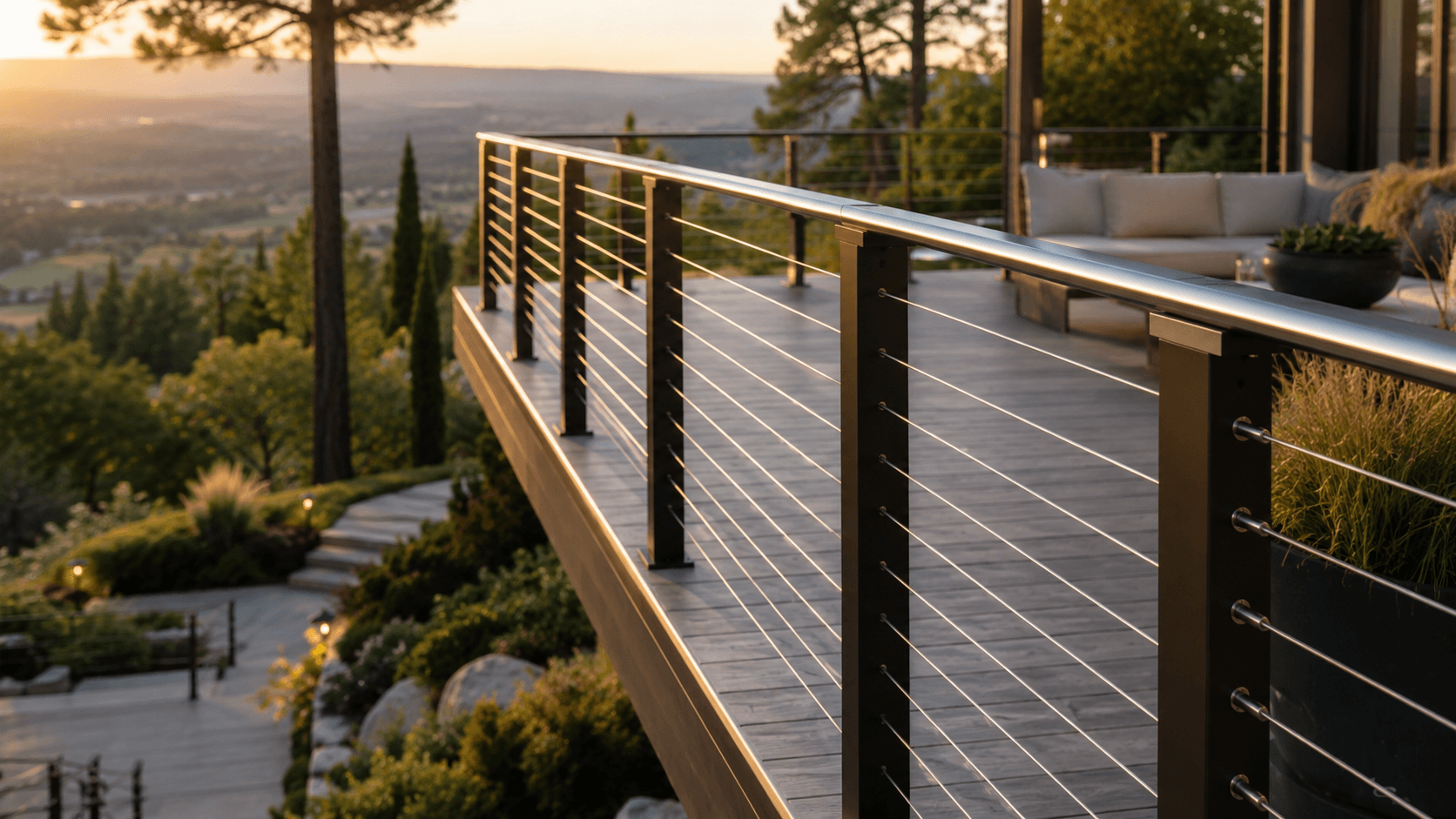
Stainless steel cable is the most popular infill choice for decks and the most durable. It holds up against humidity, UV exposure, and freeze-thaw cycles without rusting, warping, or requiring seasonal refinishing.
There are two grades to know:
- 304 stainless, suitable for inland properties like Springfield; good corrosion resistance at a lower cost
- 316 stainless, marine-grade; the right choice for Camdenton Lake properties where moisture exposure is constant
| Features | 304 Stainless | 316 Stainless |
| Corrosion resistance | Good | Excellent |
| Cost (cable only, per ft) | $0.80 – $1.20 | $1.10 – $1.80 |
| Best for | Inland MO decks | Waterfront/lake properties |
Most residential systems use 3/16″ diameter, 1×19 strand cable, the standard specification that meets building code requirements.
Top brands: Feeney CableRail, AGS Stainless, Ultra-tec
Stainless steel cable is the lowest-maintenance, longest-lasting option available, worth the material cost for any deck built to last 20+ years.
Aluminum Cable Railing Systems for Lightweight Durability
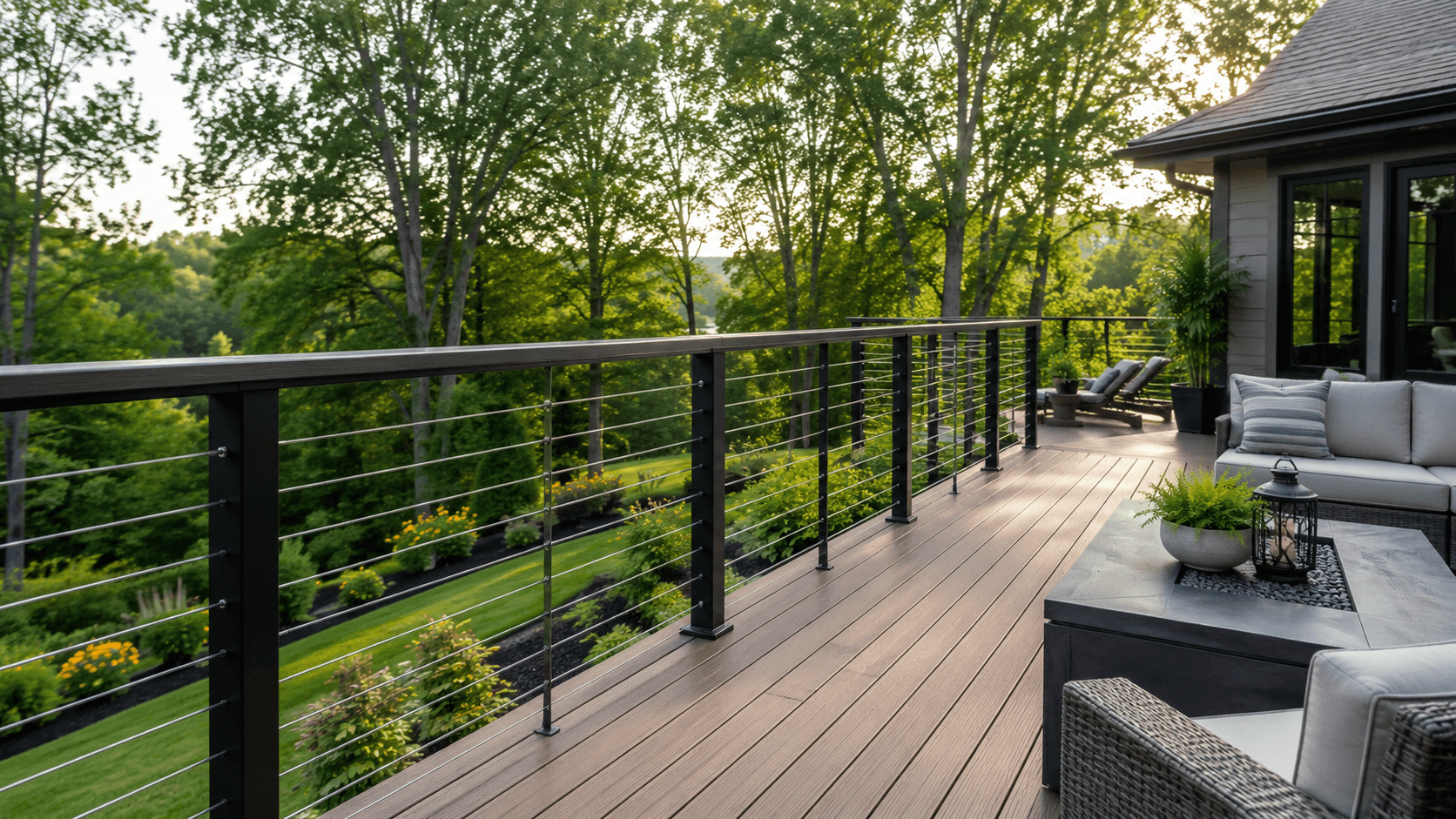
Aluminum posts paired with stainless cable are the most common combination on residential decks. The reason is simple: aluminum doesn’t rust, doesn’t need painting, and holds up through humid summers and cold winters without any seasonal upkeep.
Key advantages:
- Lighter than steel, easier to handle and install
- Factory powder-coated finish, no painting or sealing ever needed
- Available in multiple colors: black, bronze, white, and custom finishes
- Works with virtually any stainless cable infill system
Expect to pay $90–$140 per linear foot in materials. Professional installation in Missouri runs $160–$240 per linear foot all-in.
One thing to note: aluminum is less rigid than steel under high cable tension. For long runs or corner posts carrying full cable load, steel is the stronger choice.
Top brands: KeyLink Aluminum Series, Feeney DesignRail, Atlantis Rail
For most homeowners, aluminum post systems offer the best combination of durability, low maintenance, and value.
Wood Frame Cable Railing Systems for Classic Deck Designs
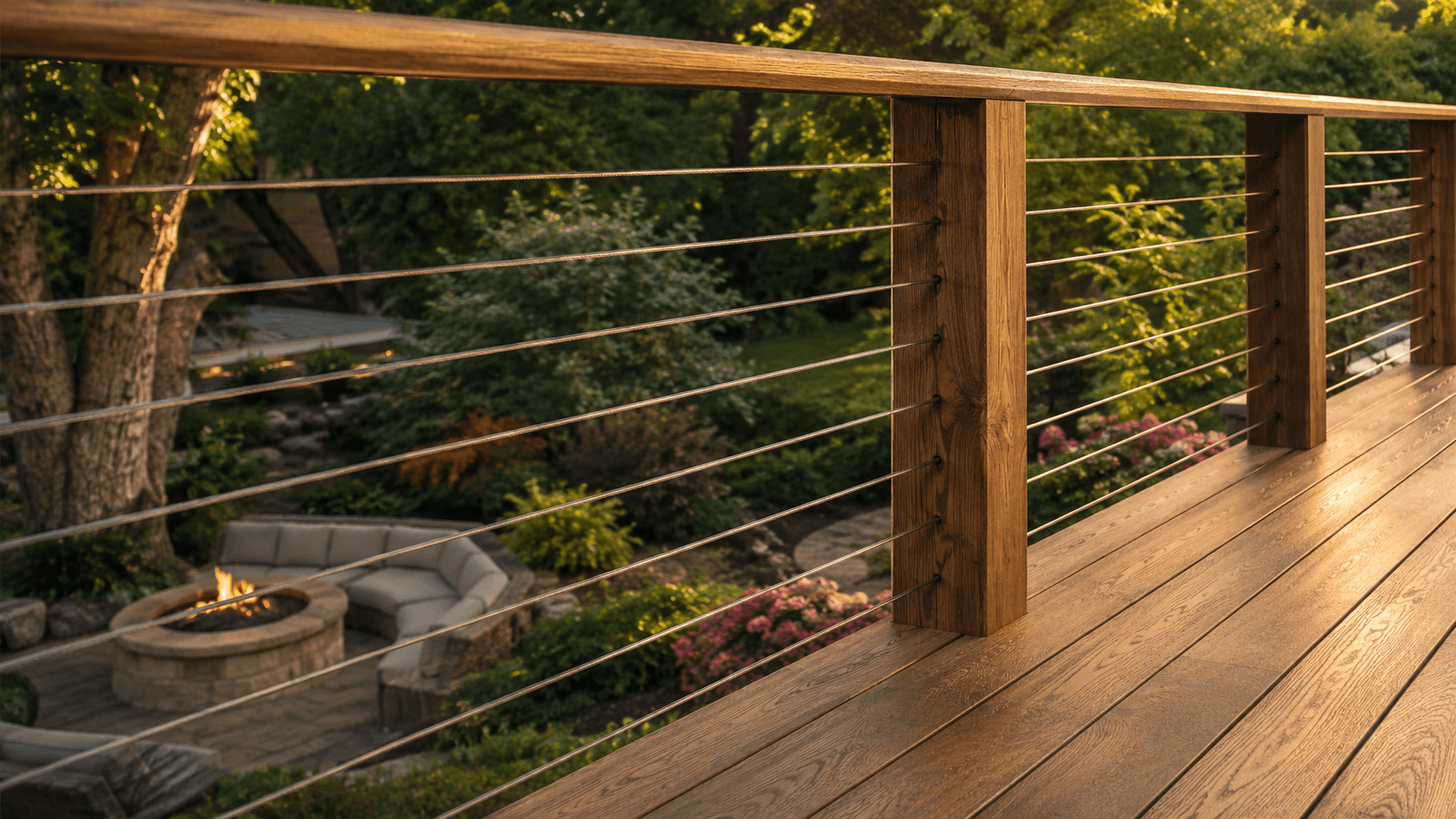
Wood posts are the most budget-friendly framing option, and a natural fit for homeowners who want the clean cable look without the aluminum price tag.
Best wood choices for Missouri’s climate:
- Pressure-treated pine, most affordable; needs annual sealing
- Cedar, naturally rot-resistant, handles moisture better than pine
- Ipe (tropical hardwood), premium option; lasts longest with minimal upkeep
Wood posts work well structurally when properly spaced every 3-4 feet. The main commitment is maintenance. Humidity and seasonal temperature swings will gray and crack unsealed wood posts within a few years.
Material cost: $60–$100 per linear foot. Professionally installed: $120–$180 per linear foot.
Wood frame systems offer the lowest starting cost, just factor in annual sealing when calculating the true long-term price.
Framed vs Frameless Cable Railing Systems Explained
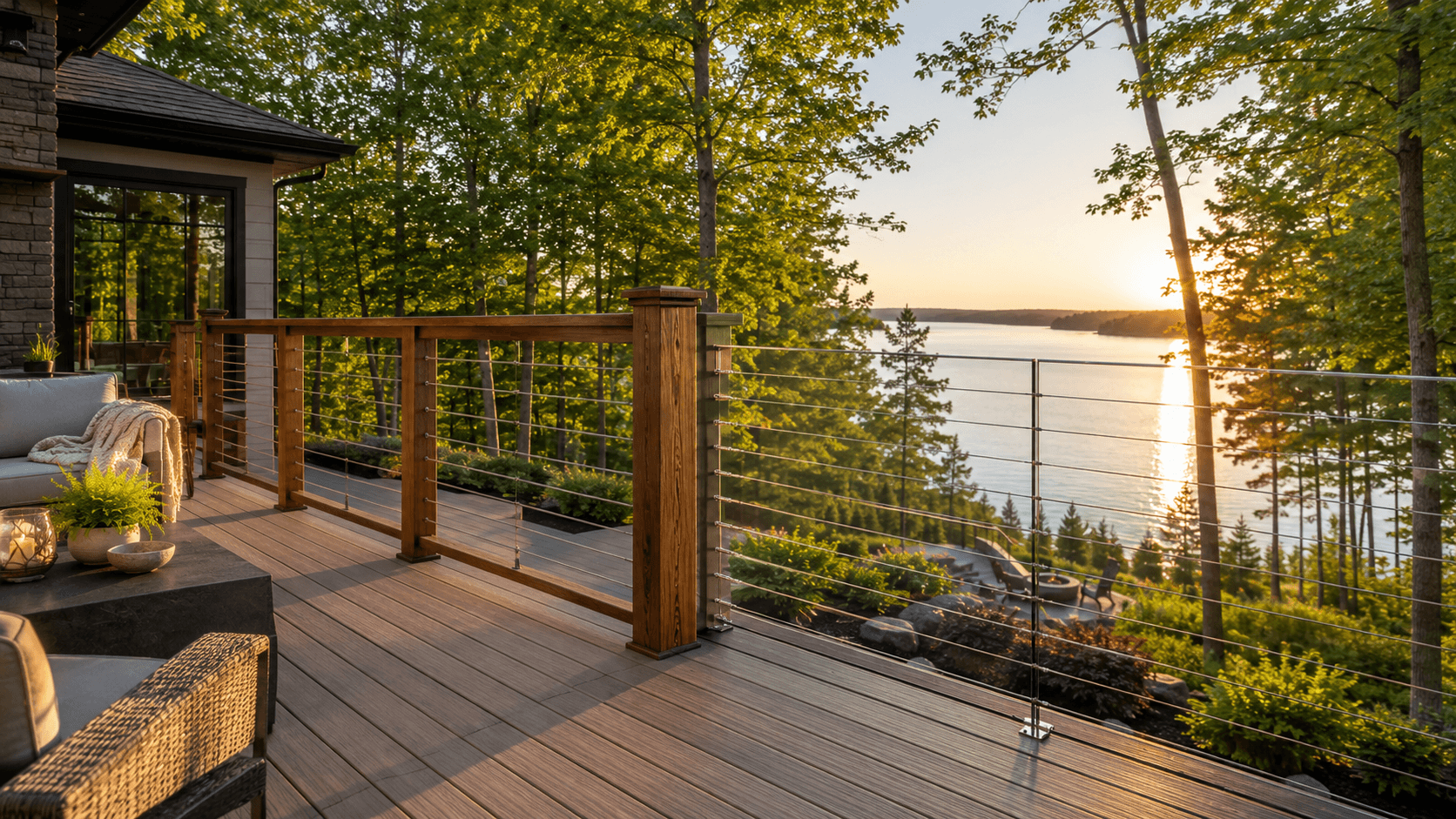
This is one of the most common questions homeowners ask, and the answer is straightforward.
Framed systems use visible posts at regular intervals. Posts anchor the cable and carry the tension load. This is the standard approach for most residential decks, widely available, cost-effective, and the easiest to get permitted.
Frameless systems use hardware that mounts directly into the deck structure, hiding the post profile for a cleaner, more seamless look. Popular on high-end builds and lakefront properties where the view matters most.
| Factor | Framed | Frameless |
| Appearance | Standard post look | Minimal/seamless |
| Installation | Straightforward | More complex |
| Cost | Lower | 20–40% more |
| Best for | Most residential decks | Premium / contemporary builds |
Frameless systems look great but require stronger deck framing and more precise installation. Confirm your structure can handle the load before specifying.
Horizontal Cable Railing Systems for Open Views
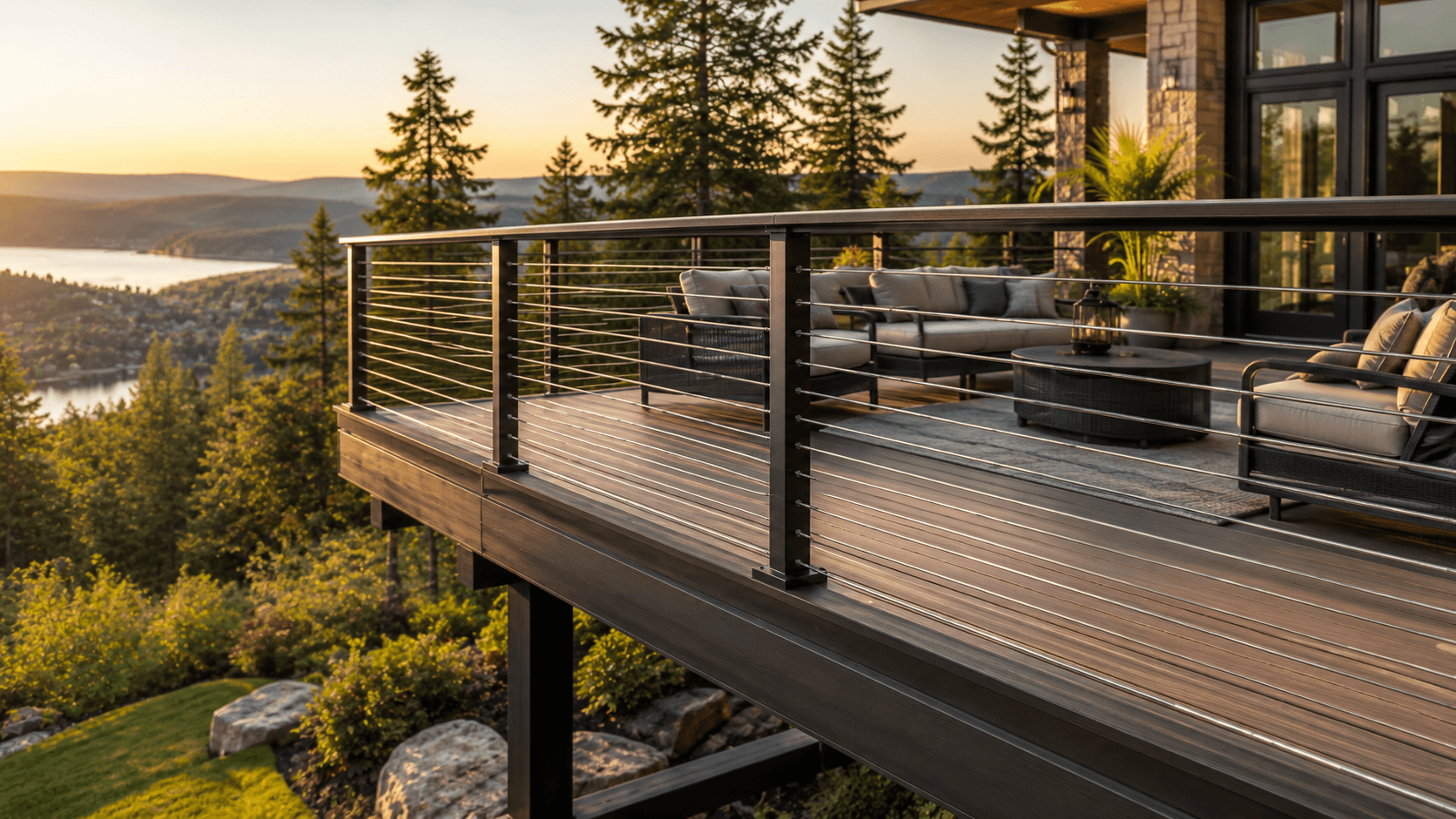
Horizontal cable is the default configuration, cables run parallel to the deck surface, creating the open, view-preserving profile that makes cable railing so popular in the first place.
What to know about horizontal systems:
- Cable spacing must stay at 3 inches maximum between runs to meet the 4-inch sphere code requirement
- Posts should be spaced no more than 3–4 feet apart to maintain proper tension
- A top rail is required in most jurisdictions
Horizontal systems are the most widely available option, the easiest for contractors to install, and the most straightforward to get permitted across both Springfield and Camdenton.
Horizontal cable gives you maximum view and the most accessible price point, the right starting point for most deck projects.
Vertical Cable Railing Systems for Safety-Focused Installations
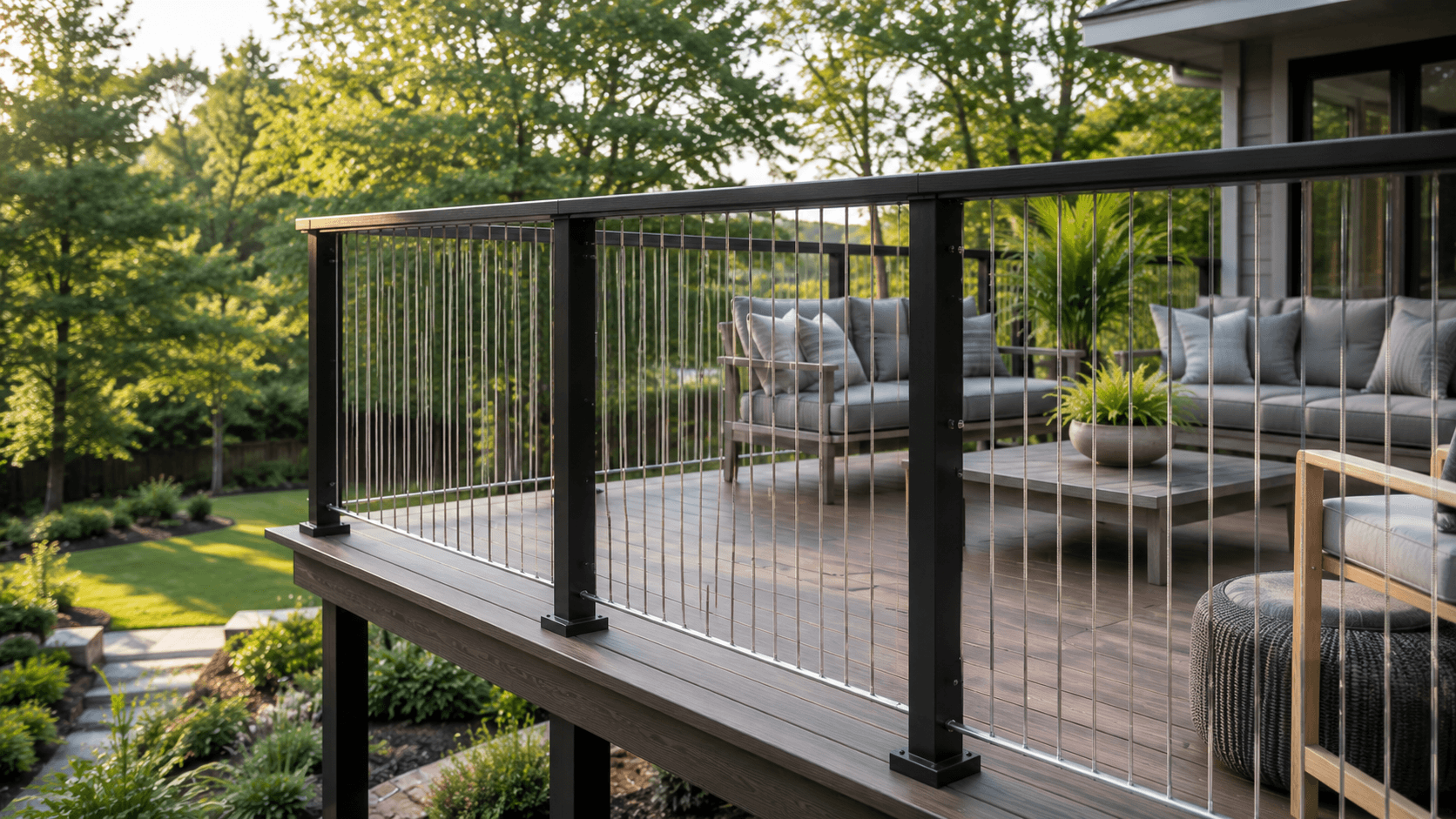
Vertical cable runs, where cables run up and down rather than side to side, are less common but serve a specific purpose: safety.
When vertical cable makes sense:
- Homes with young children, vertical cables can’t be climbed like a ladder
- Commercial or high-traffic applications
- Properties where local inspectors have flagged horizontal cable as a climbing concern
The tradeoff is cost. Vertical systems need more cable per linear foot and more individual termination points, which adds $20–$50 per linear foot over an equivalent horizontal system.
If young children will regularly use the deck, the vertical cable removes the climbing hazard entirely, and the safety benefit is worth the modest cost increase.
Pre-Assembled Cable Railing Kits for Easy Installation
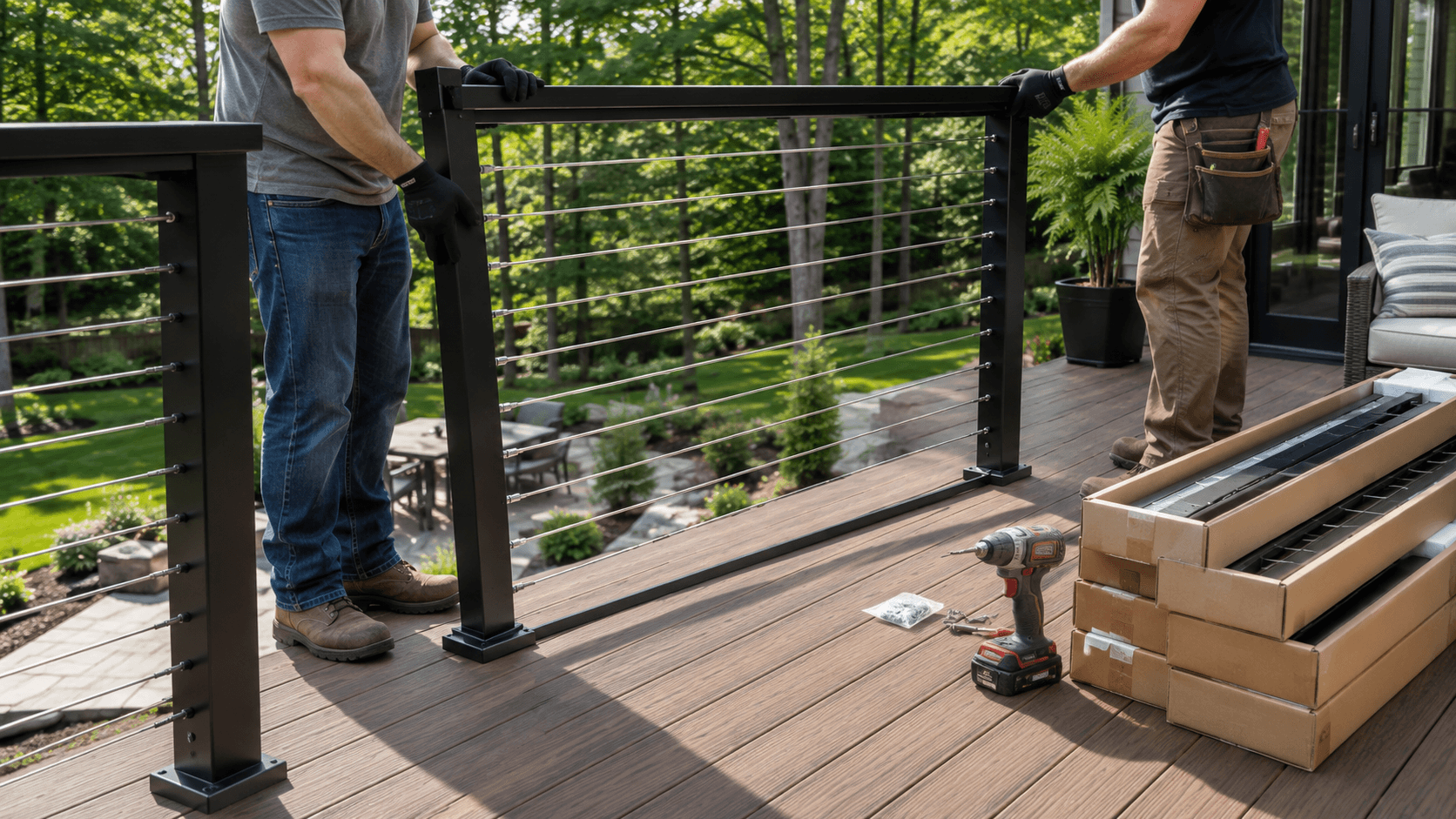
Pre-assembled kits come with everything needed for a standard install, posts, cable, fittings, tensioners, top rail, and hardware, all in one purchase. They’re designed to simplify both sourcing and installation for standard rectangular decks.
What’s typically included:
- Pre-cut stainless cable assemblies
- Post system (wood, aluminum, or steel depending on kit)
- Tensioner fittings and end terminals
- Top rail sections and installation hardware
Popular options: Feeney CableRail Kits, Atlantis Rail Deck Infill Kits, KeyLink Starter Kits
Kit pricing for a standard 40–60 linear foot deck runs $800–$2,500 depending on post material and brand. Professional installation adds $40–$80 per linear foot on top.
Important: Kits are built for standard layouts. Corner posts, stair sections, and irregular deck shapes usually need additional components purchased separately.
Pre-assembled kits are the most straightforward DIY path, just confirm your deck layout matches the kit’s configuration before ordering.
Custom-Built Cable Railing Systems for Unique Outdoor Spaces
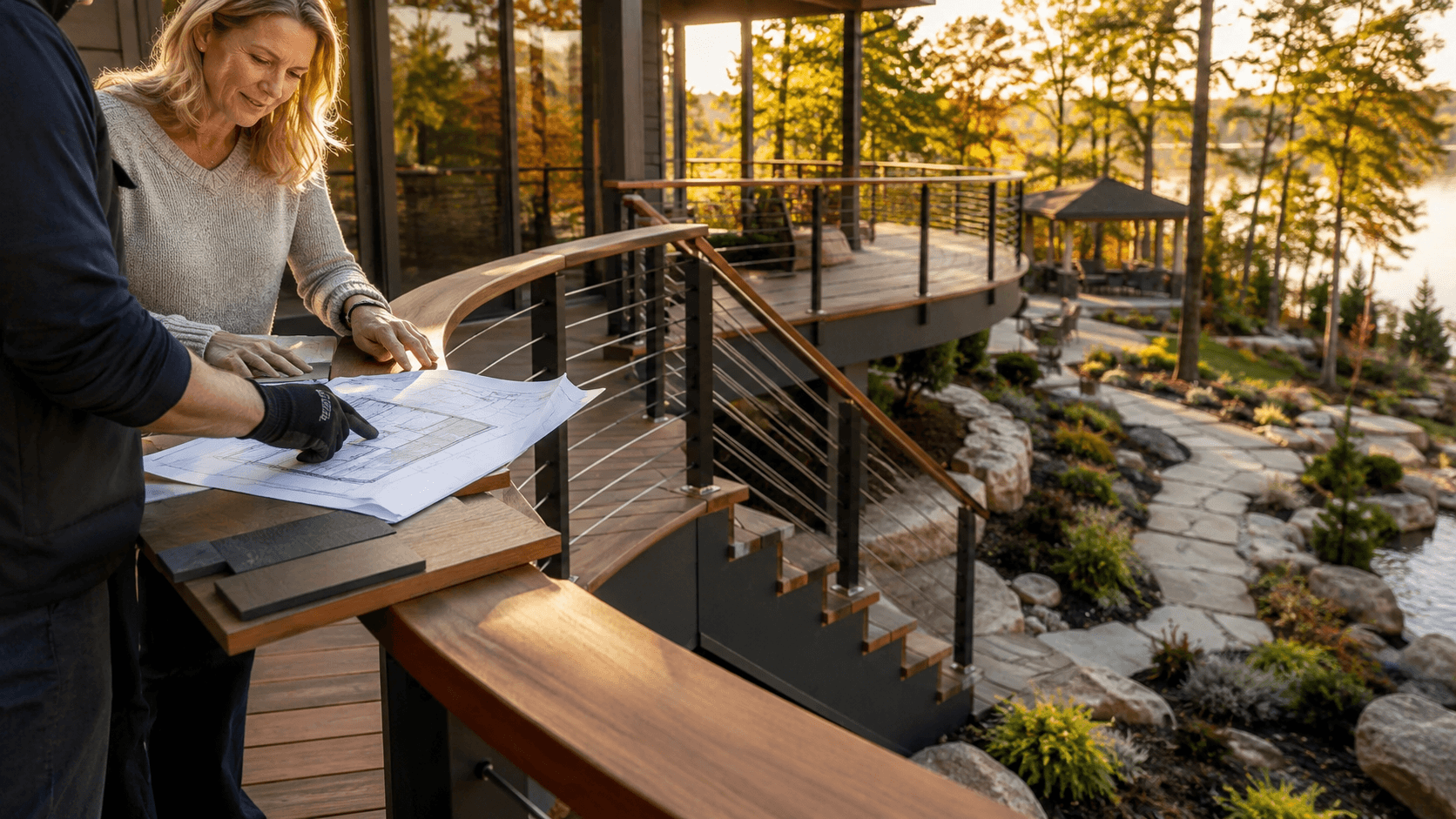
When a standard kit won’t fit your deck’s layout, material requirements, or design goals, a custom-fabricated system is the right answer.
Custom makes sense when:
- Your deck has irregular angles or a multi-level layout
- You need a specific material grade, post profile, or finish
- The project is commercial and requires stamped engineering drawings
- You’re building a premium lakefront property in Camdenton where every detail matters
Suppliers like AGS Stainless and KeyLink fabricate to exact dimensions with lead times of 2–4 weeks for most residential projects.
Cost: $250–$450+ per linear foot professionally installed, 40–80% more than kit-based systems. That premium buys a precise fit and consistent material quality that no off-the-shelf kit can match on a complex layout.
Custom cable railing is the right investment when your project’s design or site conditions go beyond what a standard kit can reliably handle.
Why Cable Railings Are Ideal for Outdoor Spaces
Homeowners are choosing cable railing over traditional options for reasons that go beyond aesthetics:
- Unobstructed views: Cable’s slim profile preserves sightlines across backyard landscapes, lake views at Camdenton properties, and open outdoor living areas in a way that wood balusters and glass panels simply can’t match.
- Low maintenance demand: Unlike wood railings that require annual sanding, staining, and board replacement, cable systems need nothing more than periodic tensioning and an occasional wipe-down. That matters in a humid climate, where wood maintenance cycles are relentless.
- Weather performance: Quality stainless steel cable handles freeze-thaw cycles, summer UV exposure, and seasonal rainfall without degrading. Aluminum posts won’t rust or warp regardless of seasonal moisture swings.
- Design versatility: Cable infill pairs with wood, aluminum, and steel post systems, making it compatible with virtually any deck or patio style, from traditional Springfield residential builds to contemporary lakefront designs in Camdenton.
- Long lifespan: A properly installed 316 stainless cable system typically lasts 20–30 years with minimal intervention, outlasting most wood railing systems by a significant margin.
- Code compliance: Cable railing systems from reputable manufacturers are engineered to meet IBC and IRC residential building code requirements, including 4-inch sphere rule compliance for cable spacing at proper tension levels.
For homeowners who want a railing system that works as hard as the climate demands, cable consistently delivers where wood and glass fall short.
How Much Do Cable Railing Systems Cost in Missouri?
Cable railing is a premium product, it costs more upfront than wood but significantly less than glass and delivers better long-term value than either in most applications.
Typical cost ranges in Missouri:
| Project Type | DIY Cost (materials) | Professional Install |
| Basic wood post + cable (per lin ft) | $60 – $100 | $120 – $180 |
| Aluminum post + cable (per lin ft) | $90 – $140 | $160 – $240 |
| Steel post + cable (per lin ft) | $110 – $170 | $180 – $280 |
| Premium system (AGS, KeyLink) | $160 – $250 | $280 – $450+ |
For a standard 12×16 ft deck with 60 linear feet of railing:
- Basic wood post system: $7,200 – $10,800 professionally installed
- Aluminum post system: $9,600 – $14,400 professionally installed
- Premium stainless system: $16,800 – $27,000+ professionally installed
Labor in Springfield typically runs $40–$65 per linear foot installed. Camdenton and lake-area properties carry a 10–20% labor premium due to contractor availability and travel.
Cable Railing vs Wood and Glass Railings: Which Is Better?
Each material has a defined role, the right choice depends on your budget, maintenance tolerance, and what you value most in an outdoor railing system.
| Factor | Cable Railing | Wood Railing | Glass Railing |
| Upfront cost | Moderate–high | Low–moderate | High–very high |
| Maintenance | Very low | High | Moderate |
| View preservation | Excellent | Poor | Excellent |
| Weather resistance | Excellent | Fair–good | Good |
| Lifespan | 20 – 30 years | 10 – 15 years | 15 – 25 years |
| Climate suitability | Excellent | Fair | Good |
| DIY friendliness | Moderate | High | Low |
| Code compliance | Easy to achieve | Easy | Requires engineering |
Cable vs Wood: Wood costs less upfront but demands significantly more ongoing maintenance in a humid climate. Cable’s 20-30 year lifespan versus wood’s 10–15 years makes cable the stronger long-term value in most scenarios.
Cable vs Glass: Both preserve views equally well. Glass costs 30–60% more than cable and requires regular cleaning to stay presentable. Cable wins on cost and maintenance; glass wins on a fully seamless aesthetic for high-end builds.
Cable railing won’t be the right fit for every project, but for most outdoor spaces, it offers the strongest combination of longevity, low maintenance, and clean design.
Are Cable Railings Durable Enough for Missouri Weather Conditions?
Yes, when the right material grade is specified. Missouri presents three primary durability challenges for outdoor railing systems:
- Humidity and moisture: Missouri averages 40+ inches of rainfall annually. Marine-grade 316 stainless cable handles sustained moisture exposure without surface pitting, rust staining, or tensile strength loss. 304 stainless is adequate for most inland applications but less suited to lake-adjacent properties.
- Freeze-thaw cycles: Cable systems handle freeze-thaw stress well. Stainless steel maintains tensile integrity through repeated thermal expansion and contraction. Wood posts paired with cable infill are the most vulnerable component, proper sealing is essential.
- UV exposure: Missouri summers deliver intense sun exposure that degrades many materials over time. Stainless cable and powder-coated aluminum posts are highly UV-stable. Wood posts without UV-protective sealers will gray, crack, and lose structural integrity within 3–5 years.
- Wind load: Properly tensioned cable at correct spacing (typically 3″ maximum) meets residential wind load requirements across Missouri without additional structural reinforcement in most standard deck applications.
Specify the right material grade for your location and maintain tension annually, cable railing handles Missouri’s climate better than any other railing system available.
Maintenance Tips for Long-Lasting Cable Railings
Cable railings are low-maintenance, not zero-maintenance. These steps keep the system performing and looking its best through seasonal extremes:
- Re-tension cables annually, thermal expansion and contraction loosen cable tension over time; check and adjust each spring before peak season
- Clean with mild soap and water, remove salt, pollen, and organic buildup that accelerates surface oxidation on cable and fittings; avoid abrasive cleaners
- Inspect fittings and end terminals, look for signs of corrosion, loosening, or thread wear at tensioner points; catching fitting issues early prevents cable failure
- Seal or refinish wood posts every 1–2 years. Wood is the most maintenance-intensive component in a cable system; consistent sealing prevents moisture infiltration and UV degradation
- Check post bases for water pooling, standing water at post base connections accelerates corrosion on steel hardware; ensure adequate drainage around all post anchor points
- Apply stainless steel polish annually. A light application of marine-grade stainless polish maintains the surface finish and provides an additional layer of oxidation resistance on cable and fittings
A consistent annual maintenance routine takes less than an hour and adds years to your cable railing system’s performance and appearance.
Common Mistakes to Avoid When Choosing Cable Railings
These are the decisions homeowners most frequently regret after installation:
Choosing 304 Over 316 Stainless For Lake Properties
The corrosion resistance difference between these two alloys is significant in high-moisture environments. Spending slightly more on 316 grade at Camdenton or any waterfront property prevents premature pitting and rust staining.
Underestimating Post Spacing Requirements
Cable railing requires closer post spacing than wood baluster systems, typically 3–4 feet maximum, to maintain proper tension and code-compliant deflection limits. Inadequate post spacing leads to sagging cable and failed inspections.
Ignoring Corner Post Engineering
End and corner posts carry the full tensile load of the cable run. Undersized or improperly anchored corner posts are the most common structural failure point in DIY cable railing installations.
Skipping The Permit Check
Cable railing systems must meet local building code requirements for baluster spacing (4-inch sphere rule), top rail height (36–42 inches depending on deck elevation), and structural load capacity. Check with Springfield or Camden County building departments before purchasing.
Buying Based On Price Alone
Budget cable systems with lower-grade fittings and thinner cable diameter look identical at purchase but perform very differently after 2–3 winters. Fitting quality and cable grade determine long-term system integrity more than any other factor.
Not Accounting For Tensioning Tool Costs
Proper cable installation requires a cable puller and tensioning tools. DIYers who overlook this add $150–$300 in tool costs or end up with improperly tensioned cable that fails inspection.
Most cable railing mistakes are avoidable, the homeowners who get it right are the ones who ask the right questions before purchasing, not after installation.
Final Thoughts
Cable railing systems are one of the best long-term investments homeowners can make for decks and outdoor living spaces. The combination of low maintenance, genuine weather durability, and clean visual design makes cable the practical choice for both Springfield residential builds and lakefront Camdenton properties.
Choose the right material grade for your environment, specify properly engineered post systems, and work with a contractor who understands building code requirements, and your cable railing system will outlast virtually every alternative you could have chosen.
FAQs
What Is The Best Cable Railing System For Outdoor Spaces?
Feeney CableRail and KeyLink are the most consistently recommended systems for residential applications. For premium lake-area builds, AGS Stainless with marine-grade 316 cable offers the best corrosion resistance and longevity.
How Much Does Cable Railing Cost In Missouri?
Professionally installed cable railing in Missouri typically costs $120–$280 per linear foot depending on post material and system brand. A standard 60-linear-foot deck railing runs $7,200–$16,800 installed for most mid-range systems.
Is Cable Railing Safe For Homes With Children?
Yes, when properly installed. The cable must be tensioned to prevent a 4-inch sphere from passing through, meeting IRC residential code requirements. Post spacing and top rail height must also comply with local building codes, confirm requirements with your Springfield or Camden County building department.
How Long Does Cable Railing Last In Missouri’s Climate?
A properly installed 316 stainless steel cable system typically lasts 20–30 years with minimal maintenance. Wood post components have a shorter lifespan of 10–15 years without consistent sealing and upkeep.
Do Cable Railings Require A Permit?
In most jurisdictions, yes. Any railing system attached to a deck requires a building permit and must meet local code requirements for height, cable spacing, and structural load. Check with Springfield Building Development Services or Camden County for current requirements.
What Gauge Cable Is Best For Deck Railing?
3/16-inch diameter stainless steel cable in 1×19 strand construction is the most common specification for residential deck railing, it meets structural requirements for most standard spans while maintaining a clean, slim visual profile.
Can I Install Cable Railing Myself?
Yes, but it requires proper tools, accurate post spacing, and a solid understanding of tensioning requirements. DIY installation saves $60–$150 per linear foot in labor but mistakes in corner post anchoring or cable tension are the most common causes of failed inspections.
What Maintenance Does Cable Railing Require?
Annual cable re-tensioning, periodic cleaning with mild soap and water, annual stainless polish application, and regular sealing of any wood post components. Humidity and freeze-thaw cycles make annual inspection a practical minimum.
Is Cable Railing More Expensive Than Wood Railing?
Yes, cable railing costs 40–80% more upfront than a standard wood baluster system. However, cable’s significantly lower maintenance costs and longer lifespan make it the stronger long-term value for most homeowners.
What Is The Difference Between 304 And 316 Stainless Steel Cable For Decks?
316 stainless steel contains molybdenum, which significantly improves corrosion resistance in high-moisture environments. For inland properties like Springfield, 304 is adequate. For lake-area builds in Camdenton or any waterfront property, 316 is the recommended specification.