Your deck railing does more than meet code requirements. It defines the visual character of your outdoor space, frames the view from inside the home, and determines how much maintenance you sign up for over the next decade. The good news is that you don’t need a complicated design to get a great result. These three railing systems, classic wood, modern metal, and glass cover the full range of style, budget, and performance needs for Missouri homeowners. Here’s what each one delivers and how to choose the right fit for your deck.
Why Your Deck Railing Design Matters
Most homeowners focus the majority of their deck planning budget on the decking surface and give the railing a quick decision at the end. That approach consistently produces regret, because the railing is what visitors see first, what you look at every time you use the deck, and what determines the overall feel of the outdoor space.
Railing design matters for three reasons:
Visual impact. The railing frames the deck from every angle, from the yard looking up, from the interior looking out, and from the deck itself. A railing that clashes with the home’s architectural style or the decking material undermines the entire investment.
Safety and code compliance. Any deck 30 inches or more above grade requires a code-compliant railing in Missouri. That means the right height (36 to 42 inches depending on elevation), the right baluster spacing (maximum 4-inch opening), and structural connections that meet load requirements.
Long-term maintenance cost. A wood railing that needs repainting every two to three years costs significantly more over a decade than an aluminum or glass system that needs only periodic cleaning. The upfront price difference rarely tells the full cost story.
Choosing a railing design that matches your aesthetic, your budget, and your maintenance tolerance from the start is the decision that pays off every time you use the deck.
Classic Wood Deck Railing
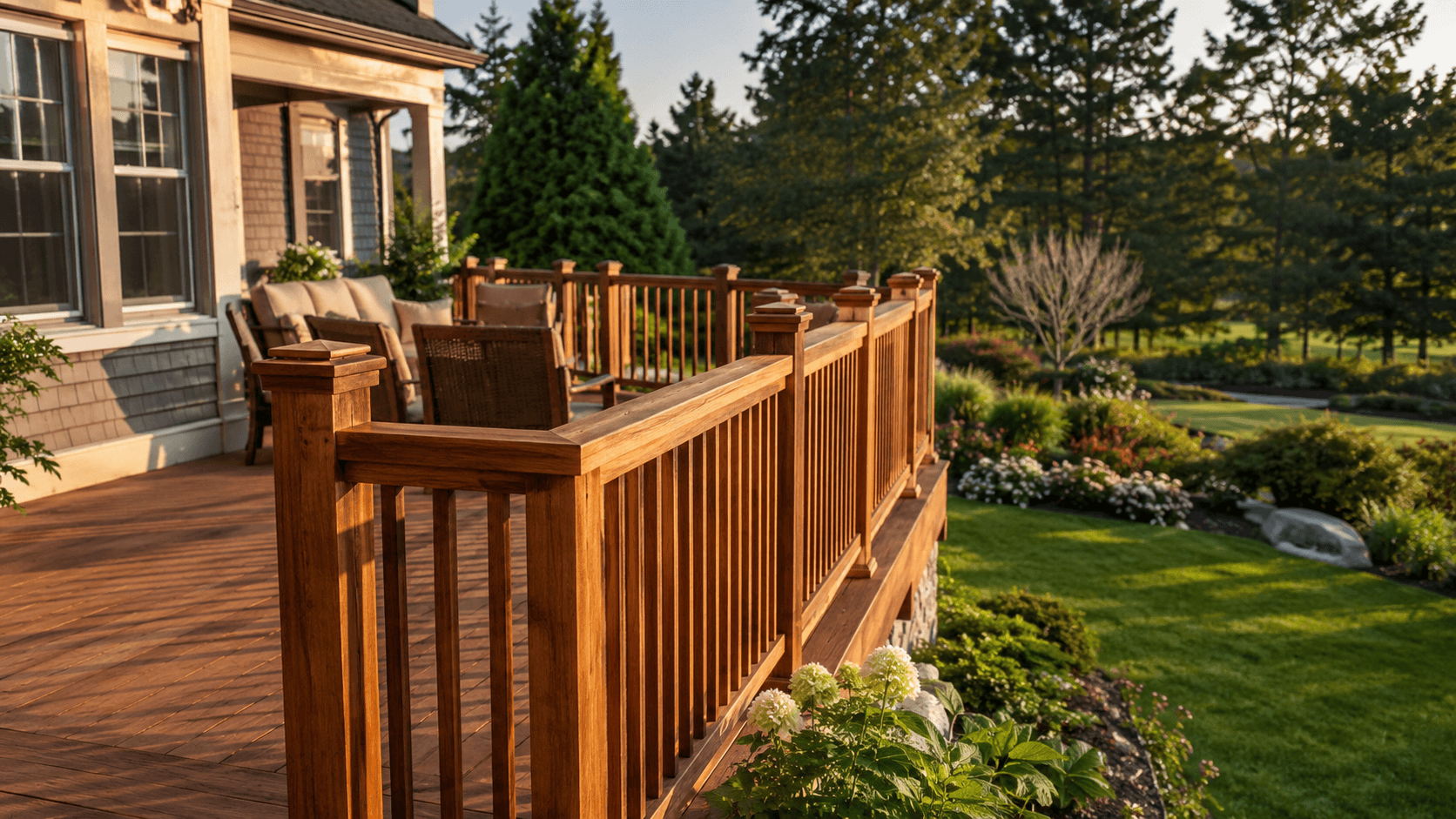
Wood railing is the most traditional and widely used deck railing system, and when it is well-built and properly maintained, it delivers warmth and character that no manufactured material fully replicates.
Wood deck railing is the natural starting point for homeowners who want a traditional aesthetic, a lower upfront cost, and a design that integrates seamlessly with wood or composite decking. It is also the most customizable option, offering full flexibility in baluster profile, post cap style, and top rail design.
Common wood species for deck railing:
- Pressure-treated Southern Yellow Pine: The most affordable option; requires annual sealing to resist Missouri’s humidity and UV exposure
- Cedar: Naturally rot-resistant, handles Missouri’s moisture and freeze-thaw cycles better than pine; moderate cost
- Redwood: Premium appearance and excellent durability; harder to source in Missouri but outstanding where available
- Ipe and tropical hardwoods: Maximum durability and a rich natural color; highest cost but minimal maintenance relative to domestic softwoods
What classic wood railing delivers:
- Warm, natural appearance that complements most home architectural styles
- Full design flexibility in baluster shape, spacing, and top rail profile
- Lower upfront cost than metal or glass systems
- Paintable and stainable to any color
What to plan for:
- Sealing or staining every 1 to 3 years depending on wood species and Missouri’s seasonal weather
- Periodic inspection for splinter development, rot at post bases, and fastener corrosion
- Post base connections are the most maintenance-sensitive point on wood railing systems, ensure proper flashing and hardware to prevent moisture infiltration at the deck framing
Approximate installed cost in Missouri: $15 to $30 per linear foot for pressure-treated pine; $25 to $45 per linear foot for cedar.
Wood railing rewards homeowners who commit to a consistent maintenance schedule. Skip the seasonal upkeep and the cost advantage over metal quickly disappears in repair and replacement bills.
Modern Metal Deck Railing
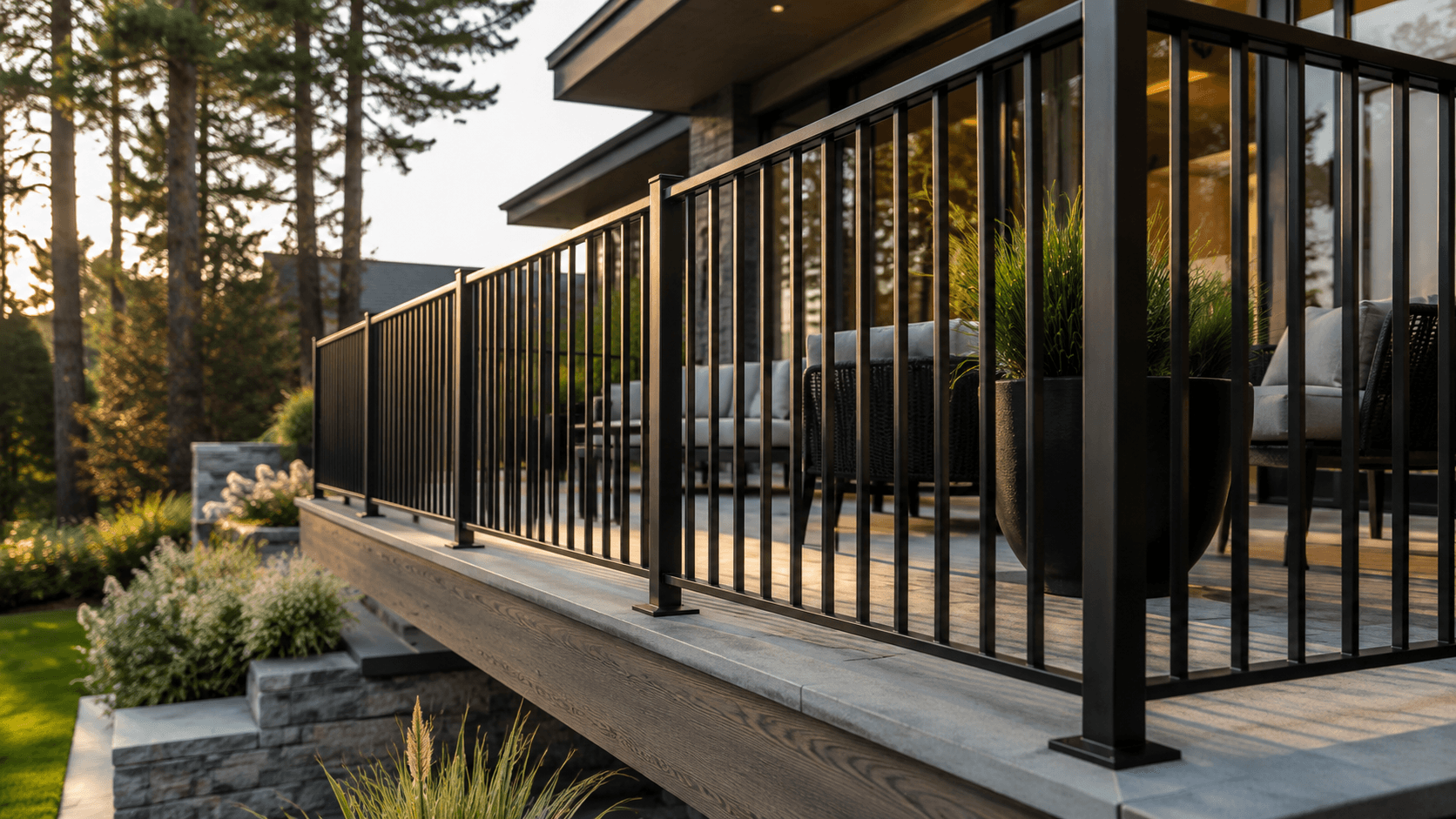
Metal railing systems deliver structural performance, design versatility, and significantly lower maintenance than wood, making them the fastest-growing railing category in Missouri residential construction.
Metal deck railing covers three main system types, aluminum, steel, and cable, each with a distinct performance profile and aesthetic. The unifying characteristic is durability without the maintenance demands of wood.
Aluminum railing, the most popular metal railing choice for Missouri residential decks. Powder-coated aluminum is rust-proof, UV-stable, and requires zero painting or sealing. Available in black, bronze, white, and custom colors. Works with virtually any deck surface material.
- Installed cost: $40 to $70 per linear foot
- Lifespan: 30 to 40 years with minimal maintenance
- Best for: Homeowners who want a clean, modern look with near-zero maintenance
Steel railing is stronger than aluminum and better suited for longer spans and corner posts carrying higher structural loads. Requires quality powder coating to resist rust in Missouri’s humid climate. Less widely available in standard residential profiles than aluminum.
- Installed cost: $50 to $80 per linear foot
- Lifespan: 25 to 40 years depending on coating quality
- Best for: Commercial applications and long cable railing runs requiring rigid end posts
Cable railing, horizontal stainless steel cable runs between posts, creating maximum view preservation with minimal visual footprint. 316-grade stainless cable is the standard specification for Missouri applications, offering excellent corrosion resistance in both inland (Springfield) and lake-adjacent (Camdenton) environments.
- Installed cost: $120 to $240 per linear foot depending on post material
- Lifespan: 20 to 30 years for cable; posts vary by material
- Best for: Decks with views worth preserving, lakefront and elevated properties
What modern metal railing delivers:
- Low to near-zero annual maintenance
- Consistent appearance without seasonal painting or staining
- Design versatility across traditional and contemporary architectural styles
- Code-compliant structural performance across all post types
Metal railing costs more upfront than wood but consistently delivers lower total cost of ownership over a 10 to 15 year window once wood’s maintenance cycle is factored in.
Glass Deck Railing for Unobstructed Views
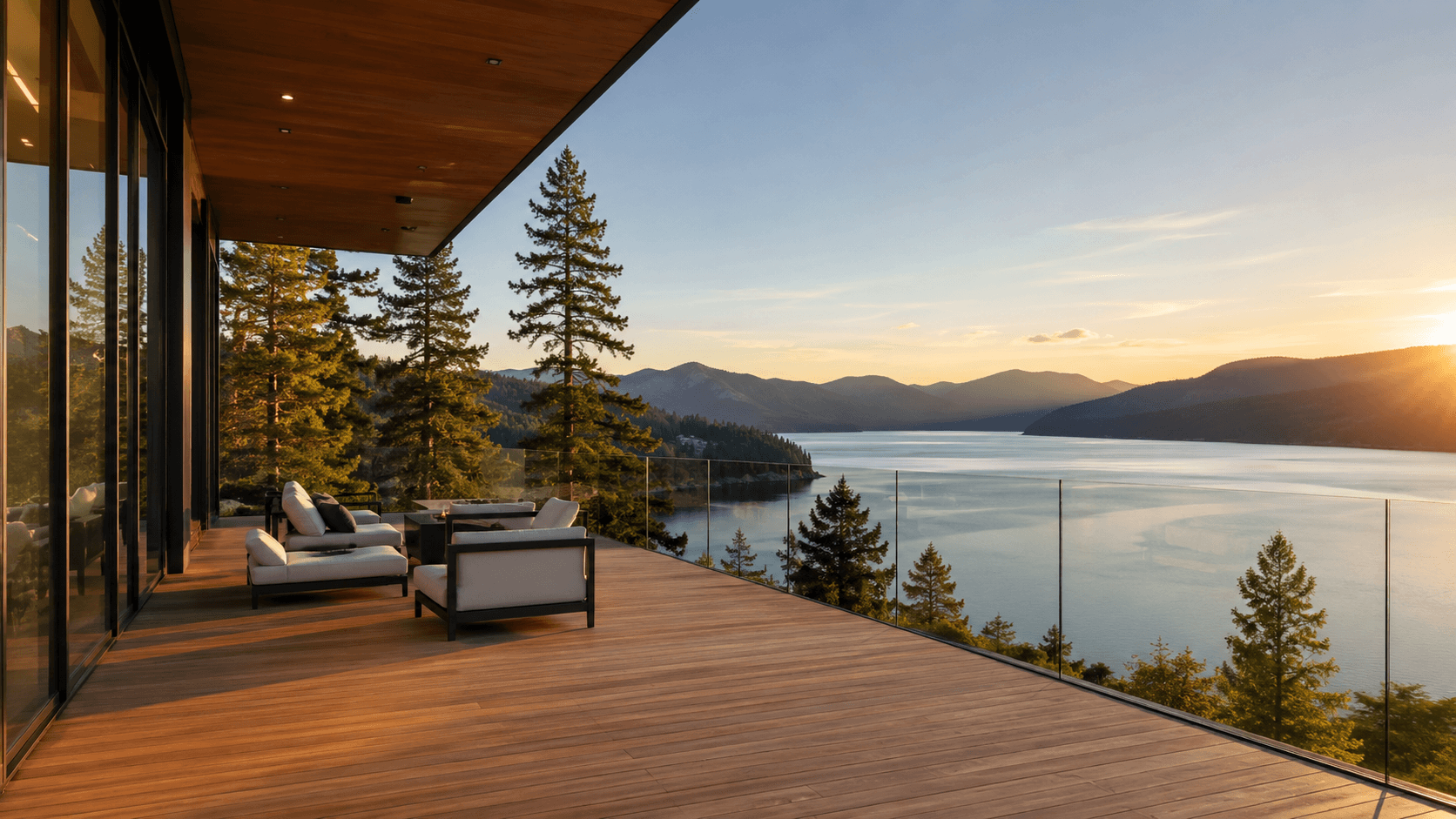
Glass railing eliminates the visual barrier between you and your surroundings, making it the strongest choice for any deck where the view is the primary reason you built the space.
Glass deck railing uses tempered or laminated safety glass panels in place of traditional balusters, creating a fully transparent barrier that preserves sightlines from every angle. It is the most visually striking railing option and the most impactful choice for elevated decks, lakefront properties, and any outdoor space where the view is the central feature.
Two main glass railing systems:
Framed glass panels, glass panels set in aluminum or steel frames that attach to posts. The frame is visible, but the glass infill is fully transparent. More affordable than frameless systems and easier to replace individual panels if damaged.
- Installed cost: $100 to $200 per linear foot
- Best for: Homeowners who want glass aesthetics at a more accessible price point
Frameless glass panels, glass panels anchored directly to the deck structure using surface-mount or fascia-mount base shoe hardware. No visible frame between panels. The cleanest, most seamless glass railing appearance available.
- Installed cost: $150 to $350 per linear foot
- Best for: Premium builds, lakefront properties, and elevated decks where the view is the design priority
What glass railing delivers:
- Fully unobstructed sightlines from every angle
- Zero visual interference with the surrounding landscape or water view
- Modern, premium aesthetic that significantly elevates the deck’s appearance
- Tempered safety glass meets building code requirements for railing infill
What to plan for:
- Glass panels require regular cleaning to stay presentable, fingerprints, water spots, and pollen accumulate on glass surfaces in Missouri’s outdoor environment
- Tempered glass panels are durable but can crack from sharp impact, check panel condition annually
- Frameless systems require precise installation and reinforced deck framing at base shoe anchor points
For Camdenton lake properties and elevated Springfield decks where the view defines the outdoor experience, glass railing is the investment that makes the view the focal point instead of the railing.
How to Choose the Right Deck Railing Design
The right railing is the one that fits your view, your maintenance tolerance, your budget, and the architectural style of your home.
Use these questions to guide the decision:
What is the primary reason you want a railing? If it is code compliance only and the view doesn’t matter, wood or aluminum is the practical choice. If preserving the view is the priority, cable or glass is worth the premium.
How much maintenance are you willing to commit to? Wood requires consistent seasonal maintenance to perform and look good. Aluminum and cable require almost none. Glass requires regular cleaning. Be honest about your maintenance tolerance before choosing.
What is your budget, upfront vs long-term? Wood has the lowest upfront cost but the highest long-term maintenance cost. Aluminum and cable cost more upfront and cost significantly less to maintain. Glass costs the most upfront and has a moderate ongoing cleaning requirement.
Does the railing need to match the home’s architectural style? Traditional homes pair naturally with wood or wrought iron. Contemporary homes suit aluminum, cable, and glass. Craftsman and transitional styles work well with wood and cable combinations.
What are the local code requirements? In Springfield and Camdenton, deck railings on decks 30 inches or more above grade must meet Missouri’s IRC-based height, spacing, and load requirements. Confirm specific requirements with your local building department before finalizing the design.
The homeowners most satisfied with their railing choice are the ones who matched the design to how the deck is actually used, not just how it looks in a product photo.
Why Choose Lake Top Deck for Custom Deck Railings?
Lake Top Deck brings something most Missouri railing suppliers can’t offer: deep product knowledge across every railing system combined with professional installation expertise under one roof.
Lake Top Deck serves homeowners across Springfield, Camdenton, and the broader Missouri region with a full range of railing systems including wood, aluminum, cable, and glass options. Their dual role as both a premium material supplier and installation team means you get accurate product guidance alongside quality craftsmanship, without navigating two separate relationships.
What sets Lake Top Deck apart:
- Showrooms in Springfield and Camdenton, see and compare railing systems in person before committing
- Professional installation team with deep knowledge of Missouri’s building code requirements
- Strong track record with both residential homeowners and professional contractors across Missouri
Whether you are replacing an aging wood railing in Springfield’s Chestnut area, specifying a cable system for a lakefront property in Camdenton, or building a premium glass railing for an elevated outdoor living space, Lake Top Deck has the product range and installation expertise to deliver the right result.
For Missouri homeowners who want a railing system built to last and installed to code, Lake Top Deck is the clear choice from design through final inspection.
Final Thoughts
Deck railing design comes down to three factors: how the space looks, how long the material lasts, and how much ongoing maintenance you’re willing to commit to. Classic wood delivers warmth and flexibility at a lower upfront cost. Modern metal offers durability and low maintenance across a wide style range. Glass maximizes view preservation for elevated and lakefront decks. Match the system to your actual priorities, confirm it meets Missouri’s code requirements, and work with a qualified installer who knows the products. Get those three things right, and your railing will perform beautifully for decades.
FAQs
What Is The Most Popular Deck Railing Design For Missouri Homes?
Aluminum railing is the most widely installed deck railing in Missouri’s residential market due to its combination of low maintenance, design flexibility, and mid-range cost. Cable railing is the fastest-growing option, particularly for lake-area properties in Camdenton where view preservation is a priority.
How Much Does Deck Railing Cost In Missouri?
Installed cost varies by material. Pressure-treated wood runs $15 to $30 per linear foot. Cedar runs $25 to $45 per linear foot. Aluminum runs $40 to $70 per linear foot. Cable railing runs $120 to $240 per linear foot. Glass railing runs $100 to $350 per linear foot depending on framed vs frameless system.
Do I Need A Railing On My Deck In Missouri?
Yes, if your deck surface is 30 inches or more above grade, a code-compliant railing is required under Missouri’s IRC-based building codes. The railing must be 36 to 42 inches tall depending on deck elevation, with baluster spacing no greater than 4 inches, and must meet structural load requirements.
What Is The Lowest Maintenance Deck Railing Option?
Aluminum is the lowest maintenance standard railing option, requiring only periodic cleaning with soap and water. Cable railing with stainless steel posts is similarly low maintenance. Both significantly outperform wood on long-term maintenance cost when Missouri’s seasonal painting and sealing requirements are factored in.
Is Glass Railing Safe For A Deck?
Yes. Glass railing systems use tempered or laminated safety glass rated for outdoor railing applications. Tempered glass is significantly stronger than standard glass and, if broken, fractures into small blunt pieces rather than sharp shards. Frameless glass railing systems must be installed with engineered base shoe hardware to meet load requirements.
Which Railing Material Lasts Longest In Missouri’s Climate?
316-grade stainless steel cable and powder-coated aluminum both perform exceptionally well in Missouri’s climate, resisting humidity, UV exposure, and freeze-thaw cycles with minimal degradation. For inland properties like Springfield, 304 stainless is adequate. For Camdenton lake-area properties with higher moisture exposure, 316 stainless is the recommended specification.
Can I Install Deck Railing Myself In Missouri?
Basic wood and some aluminum railing systems are DIY-accessible for experienced homeowners. However, most deck railing installations require a building permit in Missouri, and the structural connections, post anchoring, and code compliance requirements make professional installation the safer choice for most homeowners. Cable and glass systems specifically require professional installation to meet engineering and code standards.
What Deck Railing Design Works Best For A Lake View Property?
Cable railing and frameless glass railing are the two best choices for lake view properties in the Camdenton and Lake of the Ozarks area. Both preserve sightlines while meeting code requirements. Cable offers a lower price point and a more casual aesthetic. Glass provides a completely unobstructed view and a premium appearance suited to higher-end lake builds.
How Often Does Wood Deck Railing Need To Be Maintained?
Pressure-treated pine railing requires sealing or staining every one to two years in Missouri’s climate. Cedar extends that interval to two to three years due to its natural rot resistance. Skipping maintenance cycles accelerates graying, cracking, and post base rot, shortening the system’s effective lifespan significantly.
What Railing Height Is Required For A Deck In Missouri?
Missouri follows IRC guidelines requiring a minimum 36-inch railing height for decks less than 30 inches above grade, and a minimum 42-inch height for decks 30 inches or more above grade. Always confirm the specific height requirement with your local building department, as some Missouri municipalities adopt amendments to the standard IRC height requirements.