Deck skirting covers the open gap beneath your deck frame, turning an unfinished structure into a clean, polished outdoor feature. The right skirting material blocks pests, manages moisture, protects your substructure, and boosts curb appeal, all at the same time. From classic wood lattice and low-maintenance vinyl to stone veneer, horizontal slats, and living green arrangements, there are skirting options for every home style, climate, and budget.
This guide walks you through seven practical deck skirting ideas to help you choose the best fit for your outdoor space.
What Is Deck Skirting and Why Does It Matter
Deck skirting refers to any material, such as wood, vinyl, metal, stone, or plants, used to enclose the open space below a deck. It runs along the perimeter of the deck frame and connects the structure visually to the ground or landscaping around it.
Beyond looks, skirting serves a real functional role. It blocks debris, pests, and moisture from collecting under the deck, which protects the substructure from premature wear. Without skirting, animals like mice, raccoons, and other small pests can easily make a home under your deck. A well-designed skirting system helps keep them out and reduces the chances of unwanted visitors. Skirting also improves thermal performance by reducing air drafts under the deck boards.
From an investment perspective, a well-executed deck enclosure adds to resale value and gives your outdoor space a more intentional, finished appearance. Homeowners and contractors alike consider it a low-cost upgrade with a high visual return.
7 Best Deck Skirting Ideas for a Beautiful Outdoor Space
1. Lattice Deck Skirting for a Classic Look
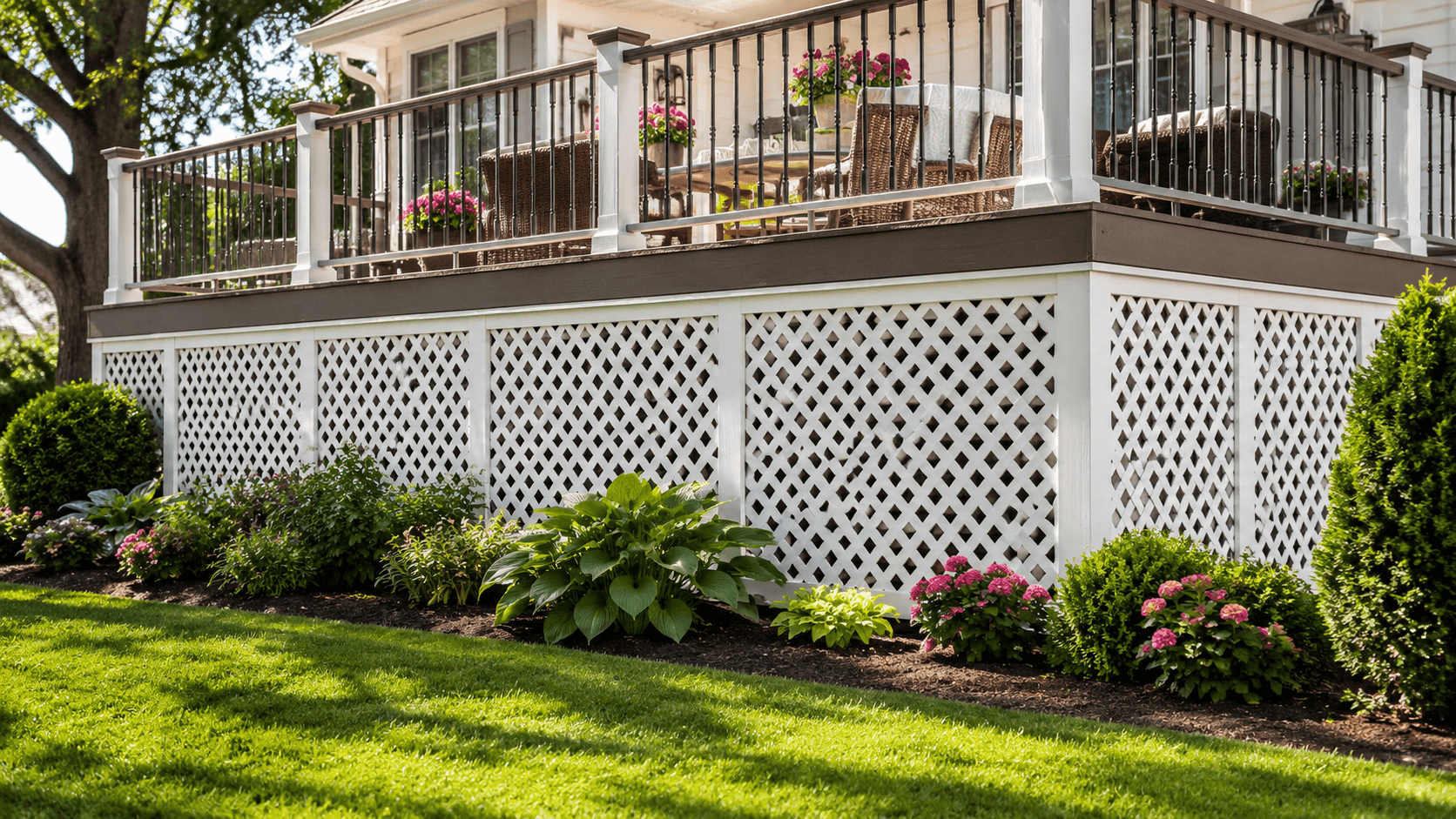
Lattice skirting is one of the most widely used solutions for residential decks, and for good reason. The crisscross grid pattern allows air to circulate freely underneath the structure, which helps prevent moisture buildup and rot. It is available in wood, PVC, and composite materials, giving homeowners flexibility on budget and maintenance level.
A painted wood lattice in white or black creates a clean, cottage-style finish. Vinyl lattice panels, on the other hand, resist warping, fading, and insect damage with almost no upkeep. For a more refined look, choose a diagonal lattice pattern with a solid border frame around the perimeter.
Best for: Traditional homes, cottages, garden-style landscapes, and budget-conscious projects.
2. Wood Plank Skirting for a Seamless Finish
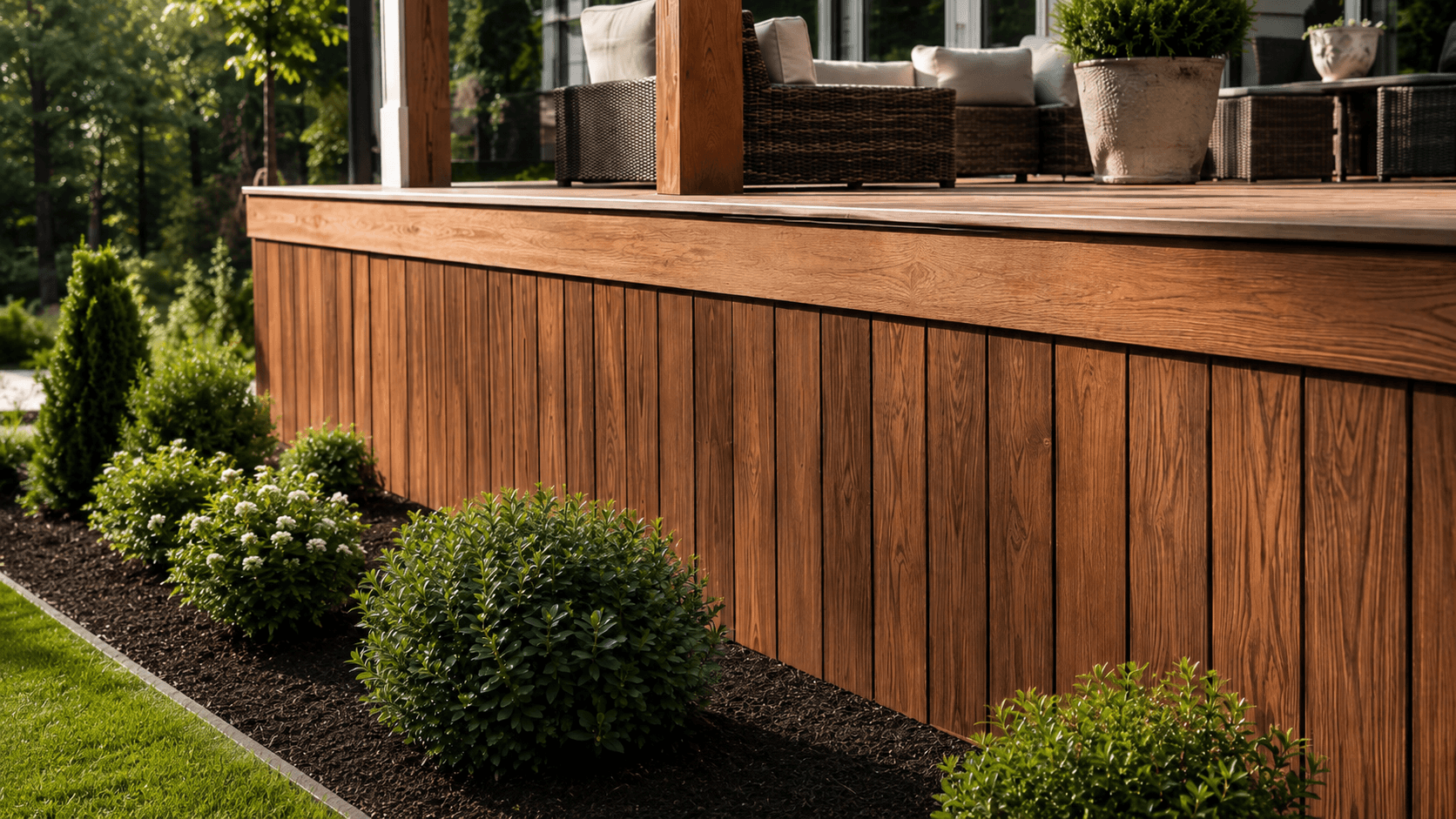
Vertical or horizontal wood planks create a clean, board-and-batten-style enclosure that blends with the deck framing above. Cedar, redwood, and pressure-treated pine are the most common species used, as they naturally resist moisture and insect activity.
Horizontal boards spaced slightly apart give the skirting a contemporary barn-door feel, while tight vertical boards produce a more formal, enclosed look. Staining or painting the planks to match the deck surface ties the whole structure together as one cohesive unit.
Keep in mind that solid wood skirting requires regular sealing or staining, typically every two to three years to maintain its appearance and resist weathering.
Best for: Natural wood decks, farmhouse exteriors, and homes with board-and-batten siding.
3. Stone or Brick Skirting for a Premium Look
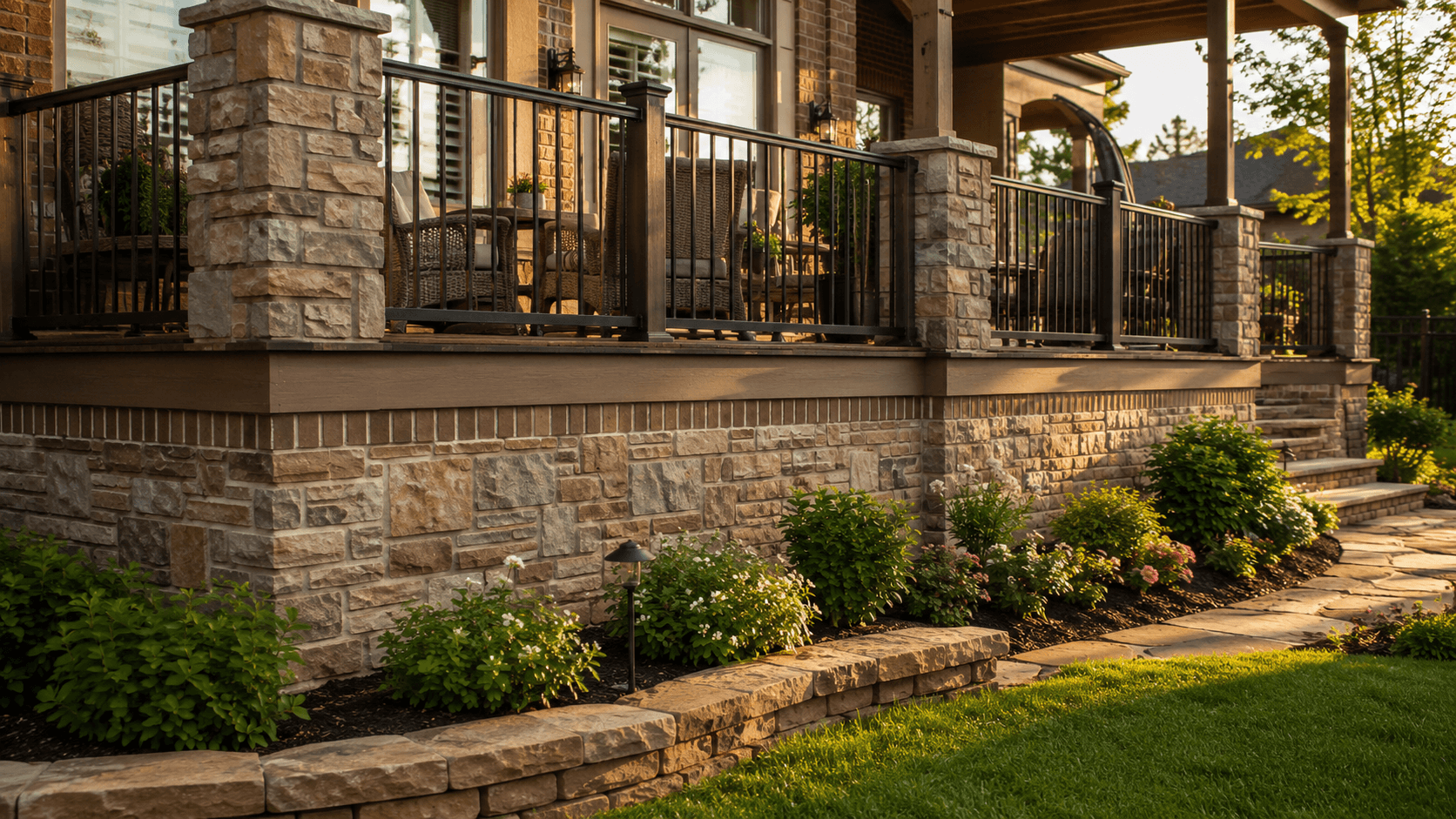
For homeowners seeking a high-end, architectural finish, stone veneer or brick skirting is hard to beat. This approach involves building a short masonry wall around the deck perimeter using natural stone, stacked slate, fieldstone, or brick. The result is a structure that looks permanent, grounded, and custom-built.
Stone and brick are highly durable; they resist rot, pests, moisture, and UV damage with minimal maintenance. They also pair exceptionally well with concrete foundations, stone patios, and masonry chimneys, creating a unified design language across the entire property.
The main tradeoff is cost. Masonry skirting is one of the most expensive options, often requiring professional installation. Faux stone panels offer a more affordable middle ground with a similar visual effect.
Best for: High-end homes, stone or brick exteriors, permanent deck structures.
4. Vinyl Deck Skirting for Low Maintenance
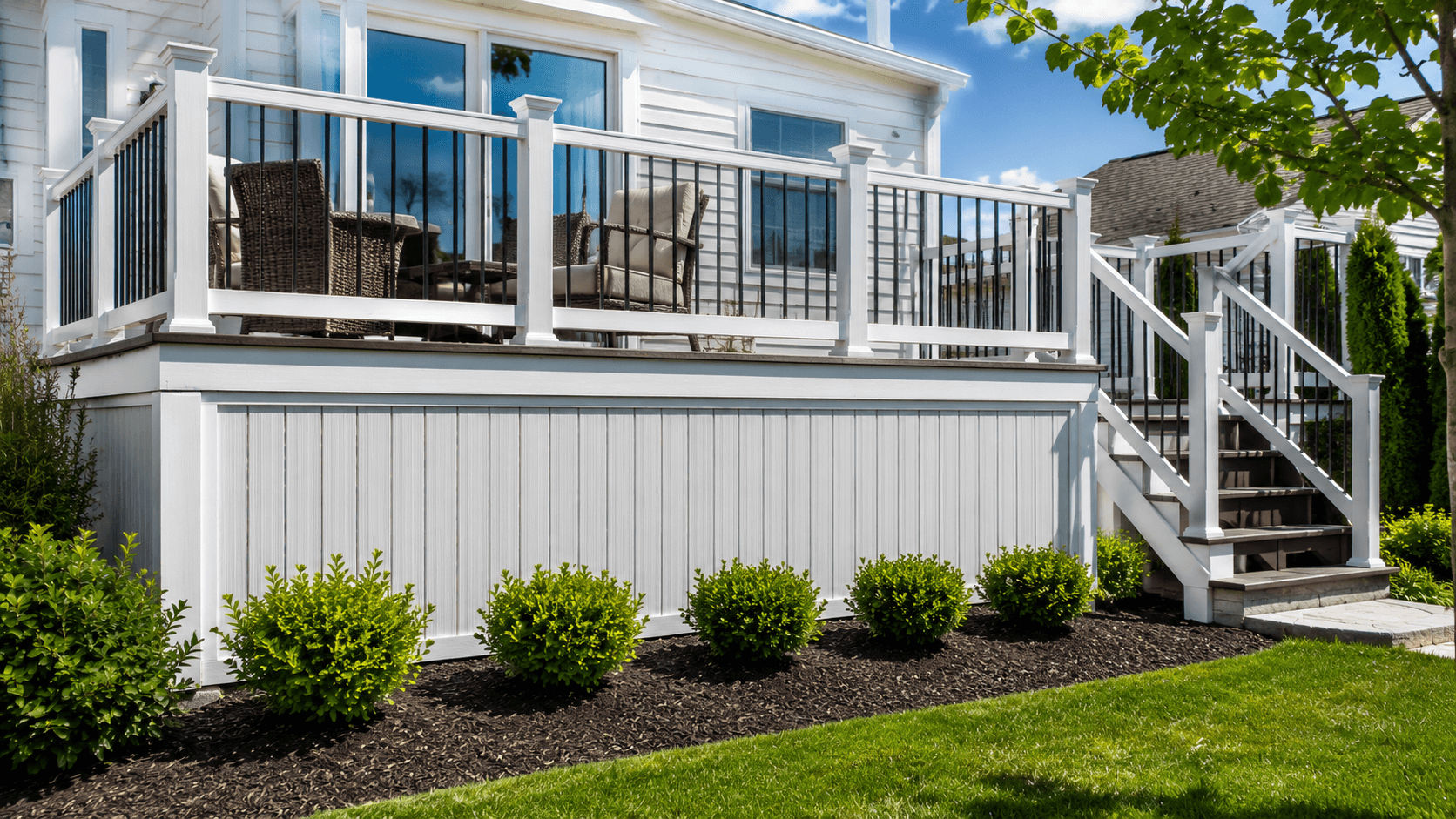
Vinyl skirting panels are a practical, long-lasting alternative to wood for homeowners who want a clean finish without the ongoing maintenance. Vinyl does not rot, crack, or require painting, and it holds up well in humid climates where wood tends to warp.
Available in a wide range of colors, textures, and panel profiles, vinyl skirting can mimic the appearance of wood, stone, or lattice at a fraction of the cost. Solid vinyl panels create a fully enclosed look, while perforated vinyl options allow for some airflow.
Installation is relatively straightforward, making vinyl a popular choice for DIY deck projects. Most vinyl skirting systems use a track and panel system that snaps into place without specialized tools.
Best for: Humid climates, DIY installations, and homeowners prioritizing low upkeep.
5. Horizontal Slat Skirting for a Modern Design
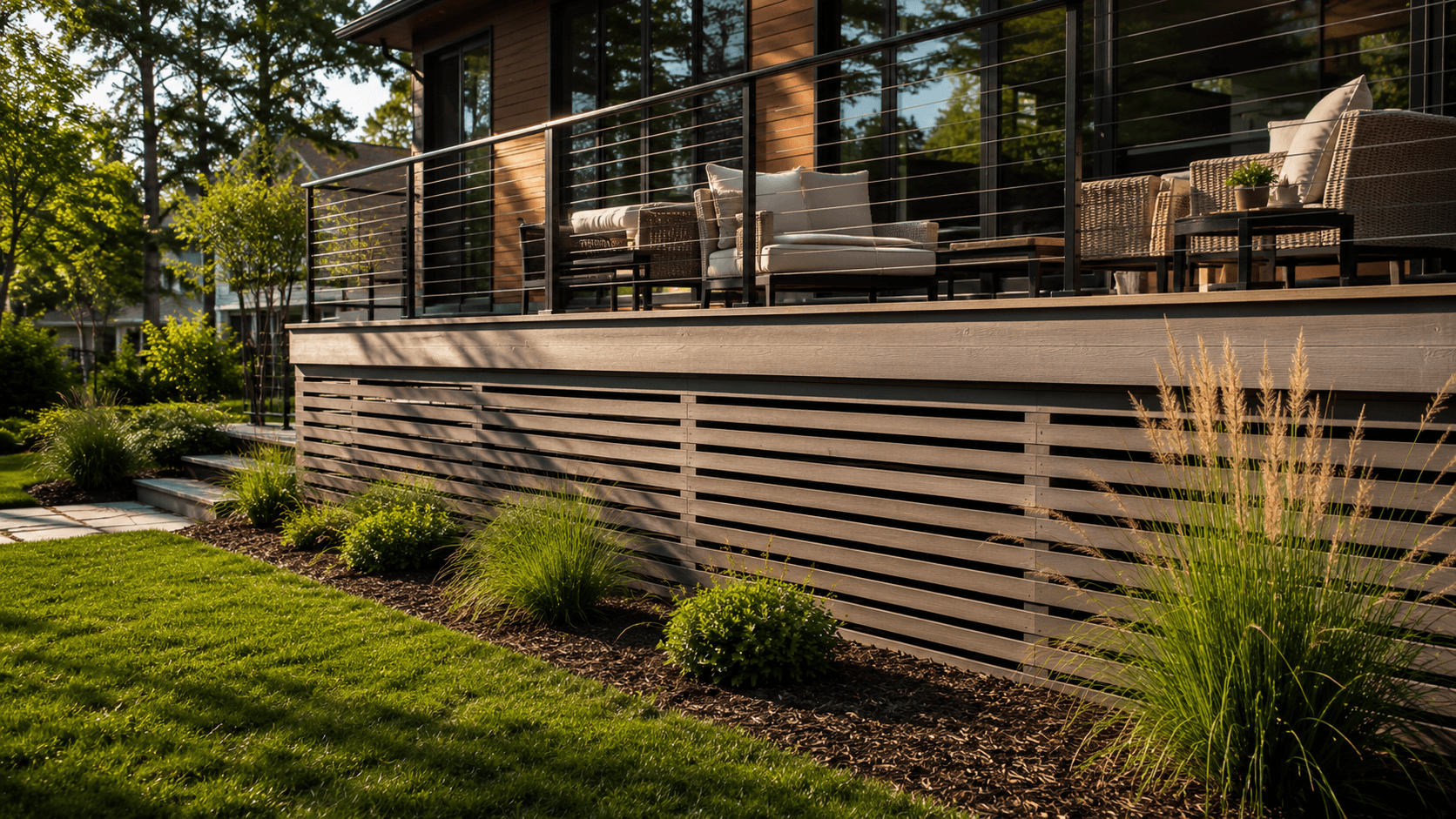
Horizontal slat skirting is the go-to choice for contemporary and mid-century modern home styles. Evenly spaced boards run parallel to the ground, creating a clean horizontal line that visually elongates the deck and grounds it to the surrounding landscape.
Cedar, composite decking boards, or powder-coated aluminum slats are commonly used for this style. The spacing between boards can be adjusted to control privacy and airflow, tighter gaps for enclosure, wider gaps for a more open, airy effect.
This style works especially well when the slat material matches the decking surface above, creating a continuous visual flow from the deck floor down to the ground.
Best for: Modern homes, minimalist landscapes, and properties with strong horizontal architectural lines.
6. Metal or Aluminum Skirting for Durability
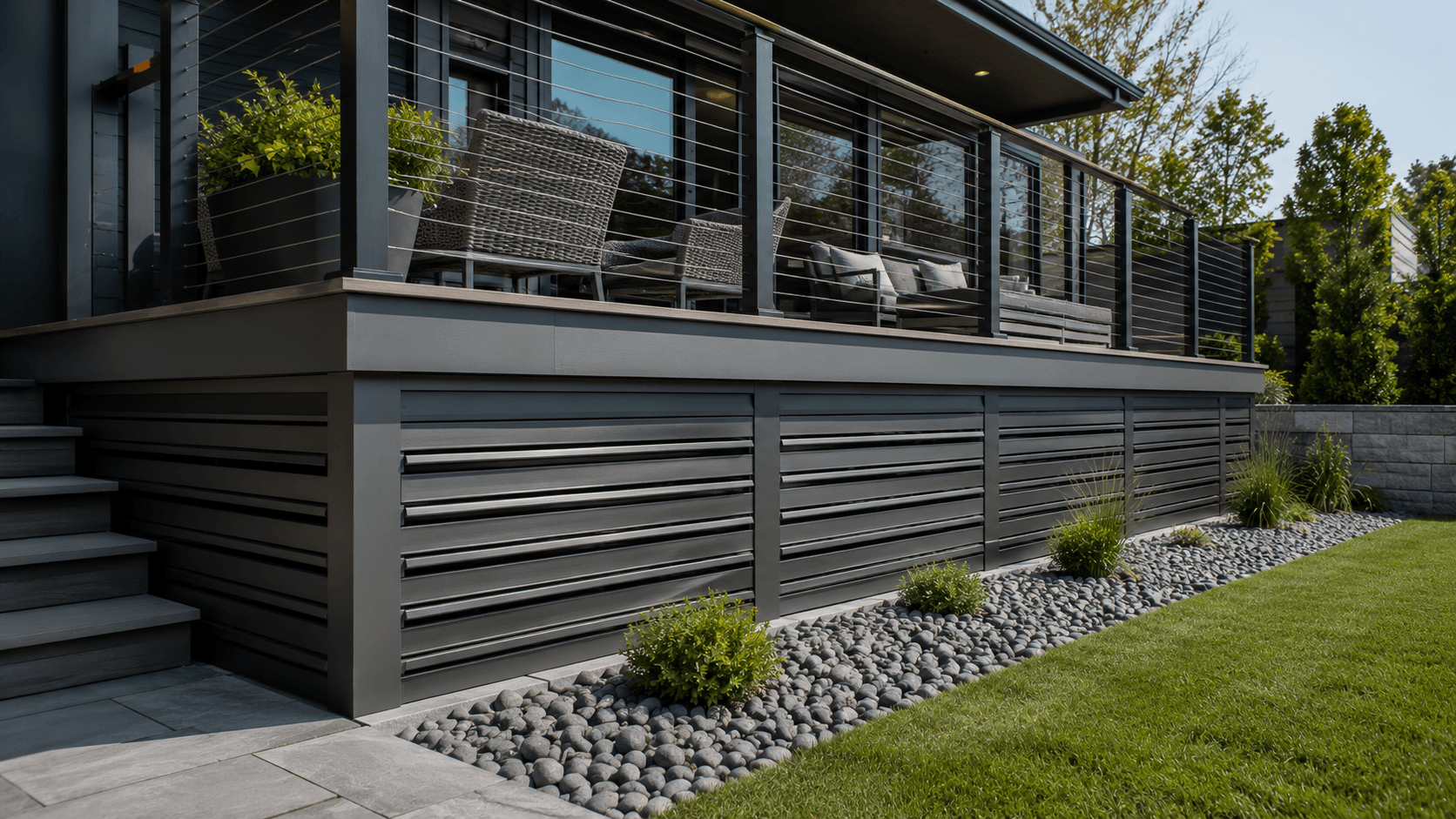
Corrugated metal panels, aluminum sheeting, and steel mesh are gaining popularity as deck skirting materials, particularly on industrial, modern farmhouse, and commercial-style properties. Metal skirting is extremely durable, fire-resistant, and nearly impervious to moisture and pest intrusion.
Corrugated steel gives a raw, textured look that works well with weathered wood decking. Powder-coated aluminum panels offer a sleek, finished surface in custom colors. Perforated metal mesh adds visual interest while maintaining airflow beneath the structure.
One consideration with metal skirting is heat retention, in direct sun exposure, metal panels can become warm to the touch. Proper installation with expansion gaps prevents buckling in high-temperature conditions.
Best for: Modern farmhouse, industrial, and commercial deck applications.
7. Living Green Skirting with Plants and Shrubs
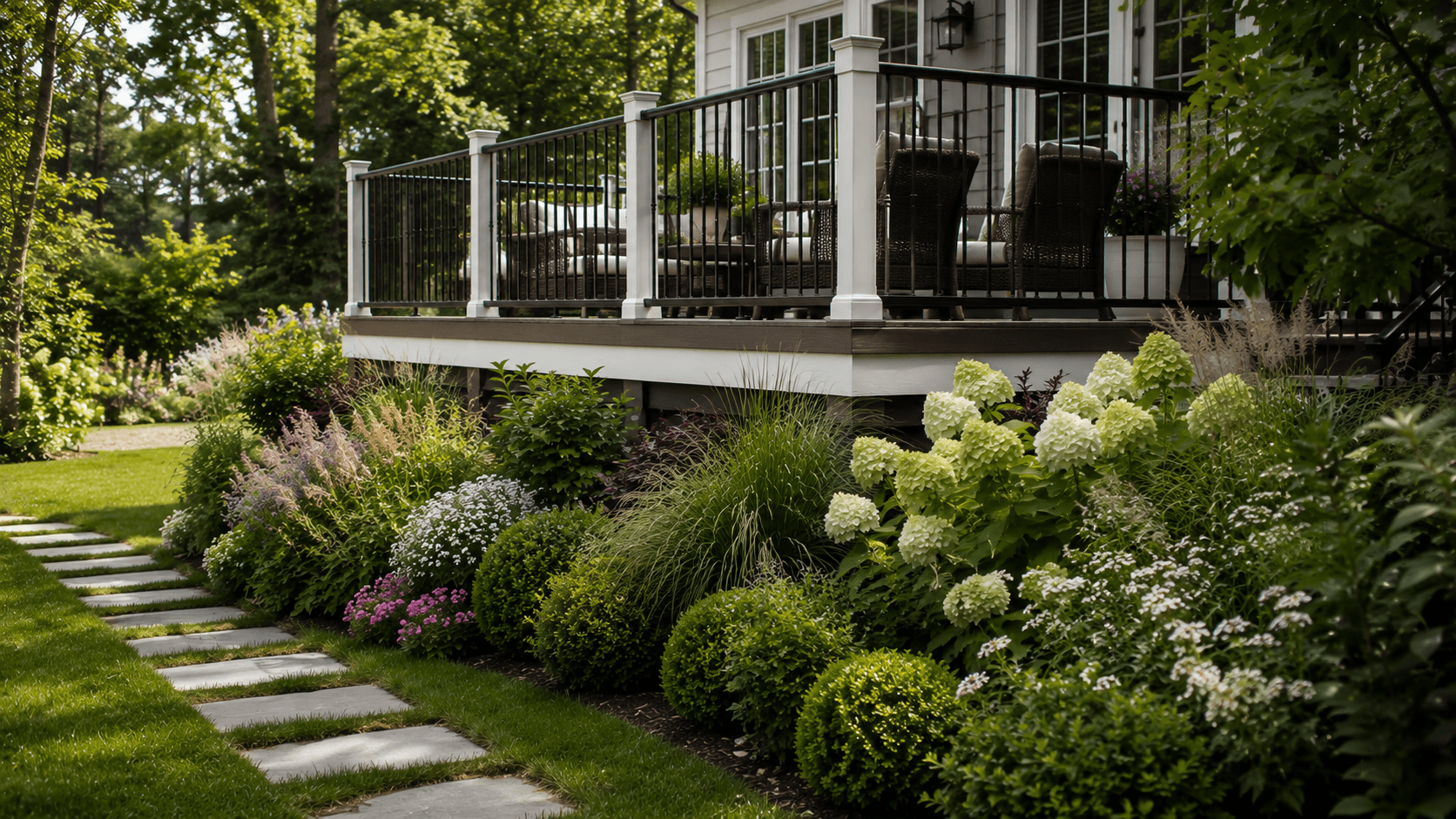
Living green skirting is the most natural and visually organic way to frame the space beneath your deck using plants, shrubs, and climbing greenery.
Living skirting uses strategic landscaping, ornamental grasses, low shrubs, flowering perennials, or climbing plants on a trellis frame to naturally enclose the space beneath the deck. This is the most eco-friendly option, and when done well, it looks intentional and organic.
Plants like ornamental grasses, boxwood hedges, hostas, and creeping juniper are commonly used because they grow low, dense, and require minimal care. Climbing vines on a trellis panel offer a softer version of lattice skirting with natural texture.
The key limitation is control plants grow and shift seasonally, so this approach works best for homeowners who are comfortable with some ongoing garden maintenance.
Best for: Garden-style landscapes, eco-conscious homeowners, and decks surrounded by mature landscaping.
Benefits of Deck Skirting
Deck skirting does far more than hide the gap beneath your deck, it actively protects, improves, and adds value to your entire outdoor structure.
| Benefit | Description |
| Pest Control | Blocks rodents, insects, and wildlife from nesting under the deck |
| Moisture Management | Reduces pooling water and limits humidity against the substructure |
| Curb Appeal | Gives the deck a finished, architectural look |
| Structural Protection | Shields joists and posts from debris, UV exposure, and weathering |
| Storage Concealment | Hides utility items stored under the deck |
| Property Value | Adds visual appeal that supports resale price |
According to the North American Deck and Railing Association (NADRA), outdoor living improvements, including deck upgrades consistently rank among the top home renovations for return on investment.
Investing in quality deck skirting is one of the simplest upgrades that delivers lasting visual, structural, and functional returns for your outdoor space.
How to Choose the Right Deck Skirting for Your Home
Selecting the best skirting option comes down to five key factors.
- Home exterior style matches the skirting material and finish to your siding, roofing, and overall architectural language
- Climate and moisture exposure, high-humidity regions favor vinyl, composite, or metal over natural wood
- Budget, lattice and vinyl offer cost-effective solutions, while stone and custom metal sit at the premium end
- Maintenance preference, vinyl and composite require less ongoing care than painted or stained wood
- Airflow requirements, in wet climates, semi-open styles like lattice or horizontal slats help prevent moisture accumulation under the deck
The right skirting choice comes down to matching your lifestyle, budget, and home style, take your time and choose what works long-term.
Maintenance Tips for Long-Lasting Deck Skirting
Regardless of the material you choose, a consistent maintenance routine extends the lifespan of your deck skirting significantly.
- Inspect panels each spring for cracking, warping, pest intrusion, or loose fasteners
- Clean wood skirting annually with a mild detergent or deck cleaner to remove mold, mildew, and algae
- Re-seal or re-stain wood skirting every two to three years depending on sun and moisture exposure
- Rinse vinyl and metal panels with a garden hose to remove dirt, pollen, and debris
- Trim back plants from living skirting arrangements to prevent moisture retention against the structure
- Check and reapply caulk or sealant around post penetrations and panel joints each season.
With consistent seasonal care and the right cleaning routine, your deck skirting will stay structurally sound, visually sharp, and fully functional for decades to come.
Final Thoughts
Deck skirting is one of the most effective ways to elevate the look and longevity of your outdoor space. Whether you go with the timeless appeal of lattice, the clean lines of horizontal slats, the durability of vinyl, or the natural beauty of stone, the right skirting transforms an unfinished deck into a polished outdoor feature. Take into account your home’s architectural style, your local climate, and your long-term maintenance commitment before making a final decision.
With the right choice, your deck skirting will not only look great on day one but continue to perform well for years to come. A properly enclosed deck is a deck that truly works for your home.
FAQs
What Is The Cheapest Deck Skirting Option?
Lattice panels, particularly vinyl or PVC, are among the most affordable options. They are widely available at home improvement stores and easy to install without professional help, making them a popular choice for budget-conscious projects.
Does Deck Skirting Require A Building Permit?
In most jurisdictions, deck skirting alone does not require a permit, but regulations vary by municipality. If your skirting involves masonry construction or significant structural modification, check with your local building department before starting.
How Do I Prevent Moisture Damage With Deck Skirting?
Use semi-open skirting styles like lattice or horizontal slats that allow airflow beneath the deck. If you use solid panels, install vented sections or small vent covers to maintain air circulation and prevent humidity buildup.
Can I Install Deck Skirting Myself?
Yes vinyl lattice, horizontal wood planks, and prefabricated vinyl panels are all DIY-friendly options. Stone, brick, and custom metal skirting typically require professional installation due to their technical complexity.
What Is The Most Durable Deck Skirting Material?
Stone, brick, and powder-coated aluminum are the most durable materials, offering resistance to moisture, pests, UV exposure, and physical impact with minimal maintenance over the long term.
How Do I Add An Access Panel To My Deck Skirting?
Use a framed section of the same skirting material attached with removable fasteners or hinges. Position the access point near the center of one skirting run for easy entry. This is essential for inspecting the substructure and accessing stored items.
What Type Of Skirting Works Best In Humid Climates?
Vinyl, composite, and metal skirting perform best in high-humidity environments because they resist moisture absorption, warping, and mold growth. Solid wood requires significantly more upkeep in wet or coastal climates.
Can Deck Skirting Help Keep Animals Out?
Yes, solid or semi-solid skirting significantly reduces the chance of rodents, skunks, and other wildlife nesting beneath your deck. For maximum pest control, pair skirting with a ground-level barrier of hardware cloth buried a few inches into the soil.
How Long Does Deck Skirting Typically Last?
Vinyl and composite skirting can last 20 to 30 years with minimal maintenance. Painted or stained wood typically lasts 10 to 15 years with regular upkeep. Stone and masonry skirting can last the lifetime of the structure.
Should Deck Skirting Match The Deck Or The House?
Ideally, it should complement both. A common approach is to match the skirting material or color to the deck surface while echoing an element of the home exterior, such as using the same stain tone as the siding trim or matching the masonry of the home’s foundation.